Pruning for Progress

I came across a post on by Steven Bartlett Facebook the other day that caught my attention. One of those deceptively simple posts that seems obvious at first glance. My initial reaction was, “Yes, that feels true.” Then I read the comments and the idea took on more depth and nuance than I first expected.

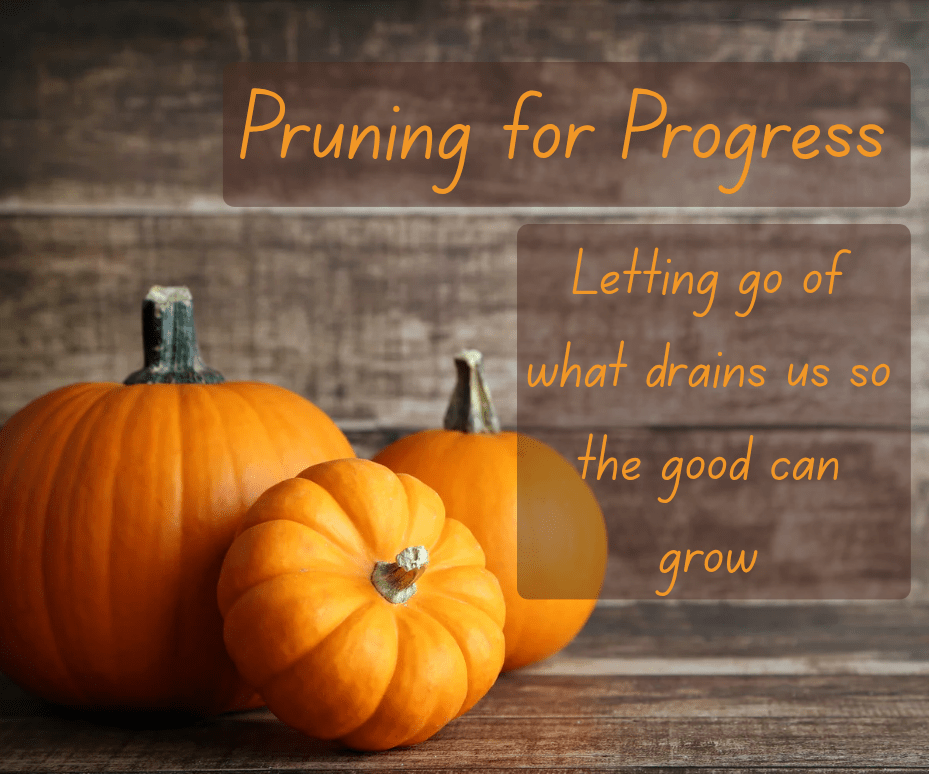
Those comments reminded me of a book I read some time ago called The Pumpkin Plan by Mike Michalowicz. In it, Michalowicz compares building a successful business to growing award-winning giant pumpkins. The key insight is not about adding more. It is about removing. To grow one exceptional pumpkin you have to cut away the others. Those smaller pumpkins might look promising but they drain nutrients from the one that has the real potential. If you leave them all, none of them truly thrive.

Several comments under Steven’s post pointed to this principle in gardening. Healthy growth is not just about watering and feeding. Timely, thoughtful pruning encourages stronger, more vibrant results. Cut back the right things, at the right time, and the whole plant benefits.

That idea translates easily into life, sport and work.

As a coach, both in a personal sense and on the grassroots rugby pitch, I see this regularly. We often focus on what we should add. More sessions, more conversations, more commitments, more effort. Rarely do we pause to consider what might need pruning. What is quietly draining energy without offering much in return.

Most of us can think of people, habits or expectations that have this effect. Individuals who find fault in what we do, question our intentions or consistently ask more from us than they give back. This is where the topic becomes uncomfortable, because it is easy to drift into extremes. Cut people off. Walk away. Be ruthless.

That is not what I am advocating.

There are many situations where giving, even when it is not balanced, brings genuine satisfaction. Parenting, volunteering, coaching young players, supporting friends through difficult periods. These relationships are not transactional and they should not be treated as such. The challenge arises when giving happens against a backdrop of resistance, negativity or obstruction. When you start to feel depleted, frustrated or wondering why you bother at all.

When that happens, I try to return to first principles. Why am I doing this? What matters to me here? What is actually within my control?

This is where a simple idea from Mel Robbins has been helpful. Let Them. Let people think what they think. Let them say what they say. Let them behave how they choose to behave. Then comes the more important part. Let Me. Let me act in line with my values. Let me invest my energy where it makes sense. Let me step back from what undermines healthy growth.

In a grassroots rugby environment, this might mean spending less time trying to persuade a resistant parent and more time supporting players who are open, curious and committed. In work, it could mean saying no to projects that look attractive but pull you away from what you do best. In life, it might involve creating a bit more distance from conversations that leave you feeling drained rather than steady.

Pruning is not about punishment. It is about clarity. It is about protecting what matters so it has the space to grow.

If there is one simple takeaway, it is this. When you feel stretched, frustrated or stuck, ask yourself what needs cutting back, not what needs adding. Progress often comes not from doing more, but from choosing more carefully.
Why Kindness Matters More Than Ever

At this time of year, when the calendar fills up and emotions often sit a little closer to the surface, it’s worth reminding ourselves of a simple truth – there are two sides to every story.

Scroll through social media, skim the comments under a news article or listen to snippets of conversation in a café, and you’ll see how quickly people rush to judgement. A single post. A single moment. A single version of events. And from that a verdict is passed. What’s usually missing is context: the unseen pressures, the private worries, the quiet struggles that never make it into the public telling.

My hope, especially during the festive season, is that we pause. Just for a moment. Before criticising. Before tearing someone down. Before adding another sharp comment to an already noisy world. The truth is we rarely know the full story of what someone else is carrying.

This is something I try to remind my own children of, using a phrase many of us grew up with: “If you’ve got nothing nice to say, say nothing.” It’s simple, it’s old-fashioned, and it’s surprisingly hard to live by.

I know this because I regularly fall short myself.

I feel it in the car when someone ahead is dithering at a junction. I feel it in the shops when my queue moves at half the speed of every other one because the person at the front is taking their time. In those moments, kindness isn’t my first response. Frustration is. Impatience is. If I’m honest my reaction usually has far more to do with my own frame of mind than with whatever that other person is doing.

When I’m tired, rushed or already carrying a bit of stress, the world feels less forgiving. When I’m calmer and more present those same situations barely register. The situation hasn’t changed… I have.

That’s why kindness matters so much. Not as a moral badge or a performative gesture, but as a quiet recognition of our shared humanity. We all struggle. Every single one of us. Even those whose behaviour seems to justify our criticism. Even those who frustrate us most.

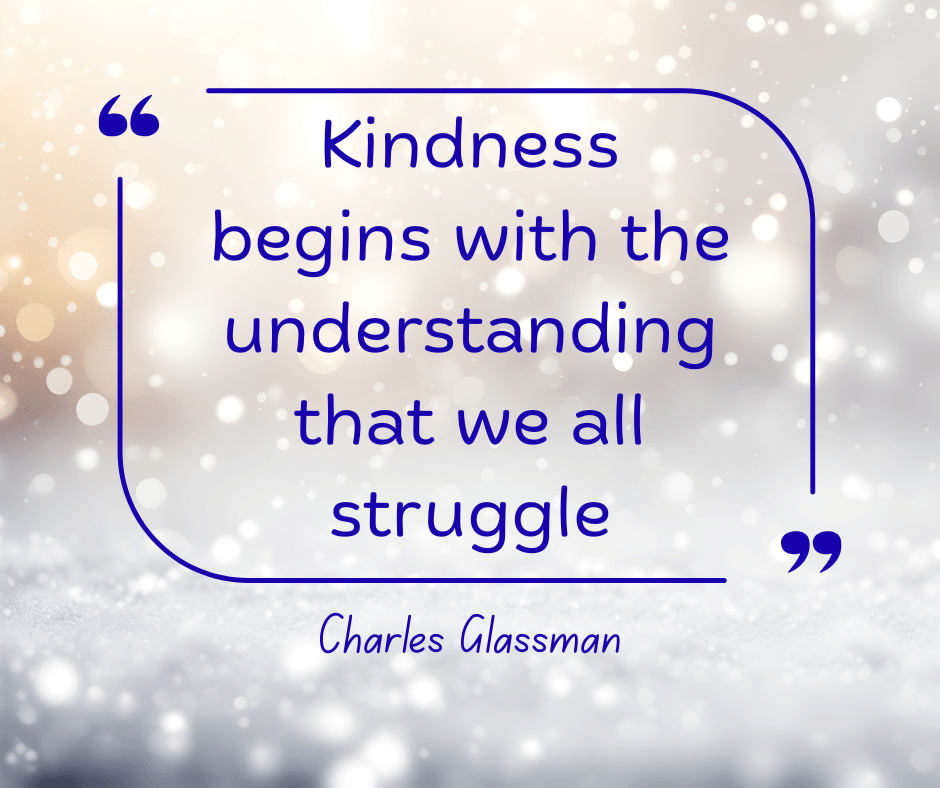
One of the quotes in my recently published book The Way You See It captures this perfectly: “Kindness begins with the understanding that we all struggle.”

As we move through this season – busy, emotional, and imperfect – my plea is a simple one. Pause. Take a step back. Assume there’s more going on than you can see. And when in doubt, choose kindness. It costs little, but it can mean everything.

From Problem Solving to Creating: Where the Real Magic Happens

I’ve always been drawn to problem solving. Whether it’s untangling a tricky situation at work, planning a complex project or figuring out how best to structure a training session to achieve the desired outcome, there’s a certain satisfaction in resolving challenges. And yet, over time, I’ve started to notice something different happening when I’m coaching my daughters’ rugby team – a place where problem solving alone doesn’t seem to capture the full picture. Sometimes inspiration hits in the midst of doing something familiar and a solution emerges that feels effortless… even a little magical.

This is the space where problem solving meets creation. It’s where intellect and intuition overlap, and where the most impactful insights often come to life.

Problem Solving: The Intellectual Approach

Problem solving is familiar territory. It’s analytical, structured and often linear. You identify an obstacle, break it down and work out the steps to overcome it. On the pitch, this could be correcting a player’s technique or addressing a tactical gap in a game. In life or work it’s equally structured: prioritising tasks, reviewing processes or finding a workaround when things go off track.

The strength of problem solving lies in its predictability. It gives you control and direction and there’s a clear metric of success: the problem is resolved… but it also has its limits. When the mind is overactive, anxious or caught in a loop of catastrophising, even simple tasks feel like wading through mud. You can try harder, push more or think longer, yet clarity remains elusive.

Creation: Inspiration Beyond Thought

By contrast creation operates differently. It’s less about doing and more about allowing. It’s the kind of insight that arises when the mind quietens, when we stop pushing and simply notice what’s present. On the rugby pitch, this is the moment you see a player’s potential mid-drill, or intuitively adjust a session so that every player can thrive. In writing or coaching, it’s when ideas flow without effort and solutions emerge naturally.

The challenge is that creation often feels hidden beneath layers of mental clutter – our worries, habits and self-judgement. It requires letting go and creating space for insight. That doesn’t mean avoiding responsibility; it means trusting that clarity will return once the mind settles.

The Overlap: Solving Problems from Inspiration

Where the magic happens is in the overlap between problem solving and creation. This is when intellectual knowledge and intuitive insight come together. You draw on what you already know, the rules of the game, the structure of a project or your experience in a situation, while letting inspiration guide your next move.

On my world that often happens in the midst of coaching. Early on, I was anxious about judgement from other coaches who had played at higher levels. I overthought during sessions, worried about getting it wrong, and doubted my instincts. Over time I’ve learned to trust both my knowledge of the game and my ability to read the players in the moment. Now, I can give “hot feedback” in the heat of a game, and also pull a player aside for a quiet technical adjustment they can apply immediately. This blend of intellect and intuition – problem solving powered by creation – is where the real impact emerges.

It’s the same pattern in other areas of life. Recently I had to work late due to urgent personal matters. Initially my mind was in a state of catastrophising. Everything felt overwhelming and progress seemed impossible. I consciously stepped away for supper. When I returned the tasks flowed easily and I completed everything without stress. The solution wasn’t created by pushing harder; it arrived when I allowed calm to return. Doing something different gave my mind the space it needed and the clarity followed naturally.

Practical Takeaways

  1. Recognise the state of mind you’re in. When things feel heavy or stuck it’s often a state issue rather than a skill issue.
  2. Step away consciously. Allow your mind to settle by doing something completely different. Even a short break can be enough to let insight surface.
  3. Trust your instincts. Knowledge and experience provide a foundation, but the best solutions often arise from intuition.
  4. Blend intellect and intuition. Use your understanding of rules, processes or techniques while staying open to fresh insight in the moment.
  5. Create space for calm. Calm isn’t a reward; it’s the condition in which clarity, creativity and effective problem solving naturally emerge.

Conclusion

Problem solving and creation aren’t opposites. They complement each other. Problem solving gives structure, clarity and direction. Creation brings insight, adaptability and inspiration. The real magic happens when they meet – when you solve problems from a place of calm, presence and trust in your instincts.

Whether you’re coaching young players, writing or tackling complex work challenges, the key isn’t trying harder. It’s recognising the rhythm of thought and calm, intellect and intuition, effort and allowance. When you allow yourself to step back, trust your experience and let calm return, you’ll often find that solutions appear effortlessly. Just like magic!

Finding Your Flight: Why Other People’s Success Should Inspire, Not Intimidate

I was listening to a DOAC podcast recently with Kevin Hart, and as he told his story, something occurred to me. We often hear people say things like “oh, he’s alright, he’s funny enough” or “well, she’s just built like an athlete,” as if talent or natural attributes alone explains success. But when you actually listen to the full story – the graft, the commitment, the setbacks – you realise how much more there is beneath the surface.

I’ve always loved biographies for this exact reason. Not the tabloid stuff, but the real journeys. I get a sense of inspiration from them and the same goes for podcasts: there are so many gems tucked into people’s experiences if we listen closely. The more I listen, the more convinced I am that when someone makes it (whether as a comedian, sprinter, writer or whatever) we should let them shine, rather than diminish their achievements.

It reminded me of Sir Ken Robinson’s idea of finding your “element” – the place where your natural talent and your passion meet. Once you find it, everything changes.

The Full Story Behind Success

Kevin Hart didn’t become Kevin Hart because he was “quite funny.” He became who he is because he chased his dream with an almost unreasonable level of commitment. The same is true for athletes like Siya Kolisi. Yes, he’s strong, fast and skilful, but countless people have those traits. What sets Kolisi apart is what you don’t see: the resilience, the leadership forged through hardship, and the decision to go all-in on what mattered most to him.

Biographies and deep interviews often reveal exactly this. Beneath every “overnight success” is someone who kept showing up long before anyone knew their name. Sir Ken Robinson spoke about this beautifully: many people never discover their element simply because they never look for it. We assume talent should announce itself loudly. But more often, it’s discovered through curiosity, trying things out, noticing what comes alive in us.

Let People Shine – It’s Not a Competition

There’s a subtle habit many of us fall into: downplaying the achievements of others. We say things like “she had good genes” or “he got lucky.” These comments seem harmless, but they take away from the reality that someone found their element and had the courage to pursue it.

Here’s the key realisation I had: If you’re not meant to be a singer, don’t pull down those who are. Let them revel in their element. And then go and find yours.

Other people’s success is not a threat to us. It’s a mirror. A reminder of what’s possible when someone discovers what truly makes them tick and commits to it wholeheartedly.

Finding Your Own Element

Over the years – in coaching, rugby, business and life – I’ve noticed a pattern. The people who flourish are not necessarily the most talented. They’re the ones who get clear about what matters and lean into it with consistency and heart.

Here are a few ways to start uncovering your own element:

Make space for reflection – Most people are too busy to notice what energises them. Create pockets of quiet. Ask yourself what you’d do even if no one noticed.

Experiment without judgement – You often don’t know what you’re good at until you try. Give yourself permission to explore: sport, writing, organising, mentoring, creating, leading.

Pay attention to the feeling – Your element usually brings a sense of ease. Not that it’s effortless, but it feels right. You feel engaged, curious, alive.

Accept that the path is rarely linear – Your interests will evolve. Your priorities will shift. That’s normal. Your element might look different at 18, 38 or 58.

Use it to serve others – Our gifts are meant to be given away. For me, what truly makes me tick is seeing people realise their own potential and watching them take flight, fully aware of their innate abilities.

Conclusion

We’re all put here with gifts, not necessarily the gifts of a Kevin Hart or a Siya Kolisi, but gifts nonetheless. It’s not selfish to share them; it’s selfish not to. When we celebrate others, we give ourselves permission to step into our own element.

So let people shine. Let their stories inspire you. And then do the real work: discover what makes you come alive and pursue it with heart and soul.

That’s where flight begins.

The First Step Still Counts: Why the Rest of 2025 Matters More Than You Think

It’s often said that we overestimate what we can achieve in a year but underestimate what we can achieve in a decade. I’ve found that to be true in ways I never expected. When I look back at the last ten years of my life, I’m frequently astonished by how far I’ve travelled – especially when measured through the eyes of my decade-younger self. The things that once felt distant, unlikely or even out of reach now form the very fabric of my daily life.

Yet what’s interesting is that even shorter stretches of time can hold enormous transformation. A couple of years, a single year, even six focused months can take us to a place that feels entirely new. Progress compounds more quickly than we think. The shifts in perspective, the habits we build, the courage we gather, the decisions we commit to – they add up quietly, steadily and sometimes quite beautifully.

But here’s the truth I return to again and again: none of it would have happened if I hadn’t started. No growth, no breakthroughs, no progress (big or small) would exist without that first step.

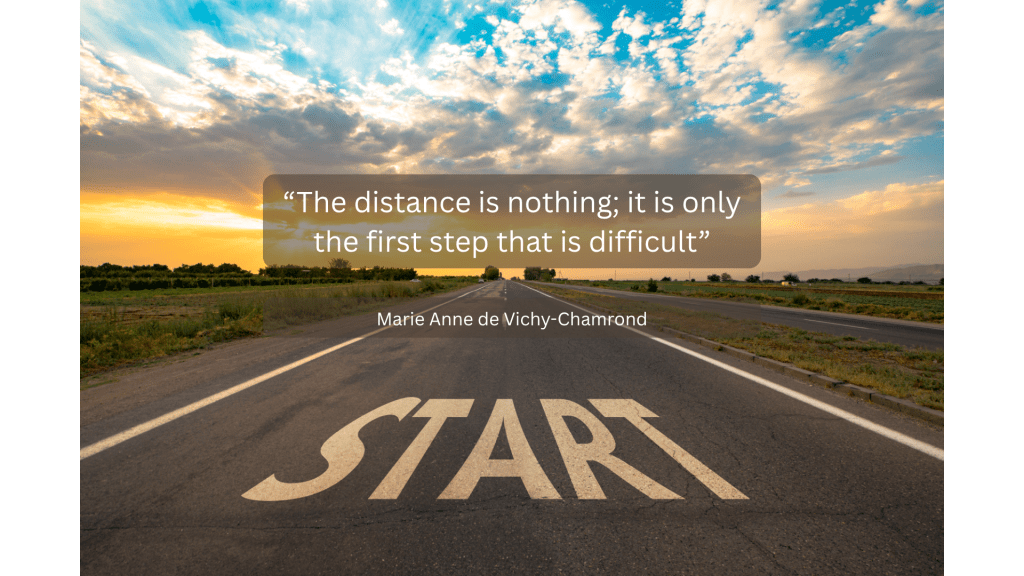
This idea shows up in The Way You See It, where I explore a quote from Marie Anne de Vichy-Chamrond, marquise du Deffand. She wrote:

“The distance is nothing; it is only the first step that is difficult.”

Every time I revisit this line, it hits me with the same clarity. The hard part is rarely the journey itself; it’s the moment we commit to it. The moment we decide to do something bold, new, uncomfortable or unknown. Starting requires vulnerability. It requires energy. It asks us to confront the resistance that keeps us still. But the moment we move, even by a fraction, we find that the next step becomes easier… and then the next… and then the next.

As we near the end of 2025, this quote feels especially relevant.

Around this time of year, many of us begin looking ahead to 2026. We start mapping out plans, setting intentions, imagining the changes we want to make or the goals we want to pursue. There’s something hopeful about this forward-looking energy, and I’m absolutely here for it.

But there’s also a quiet trap hidden within it.

The moment we start thinking about the new year, we risk unconsciously writing off the time we still have left in the current one. We slip into the mindset of “I’ll start in January” or “next year will be my year,” forgetting that we have six whole weeks available to us right now, time that is just as valid and just as full of possibility as anything waiting on the other side of 31 December.

Six weeks may not sound like much, but remember: transformation doesn’t need twelve months to begin. Six weeks is enough to start a habit that will carry you into 2026 with momentum. It’s enough to tidy up loose ends that will otherwise weigh heavily on your mind next year. It’s enough to face something you’ve been avoiding, to take a single important step, to build confidence or to create clarity.

Six weeks can change your trajectory more than you think.

If you’re feeling behind, or stuck, or low on motivation that’s okay. You don’t need to overhaul your life in the final stretch of the year. You simply need to begin the thing you’ve been meaning to begin. Your load will be lighter, your mind clearer and your next year better for it.

Start now and you’ll thank yourself in January.

Start now and you’ll walk into the new year already in motion.

Start now and you’ll experience the truth of du Deffand’s words: once you’ve taken that first step, the distance matters far less.

If you’re looking to make the most of the rest of this year, and even more of next year get in touch. We can explore whether working together might help you take that first step or build momentum for the journey you want to create.

There’s still time in 2025. Still space. Still opportunity.

And you’re only one step away from it.