The Grass Is Greener

The quote in my coaching app this week is a simple one:

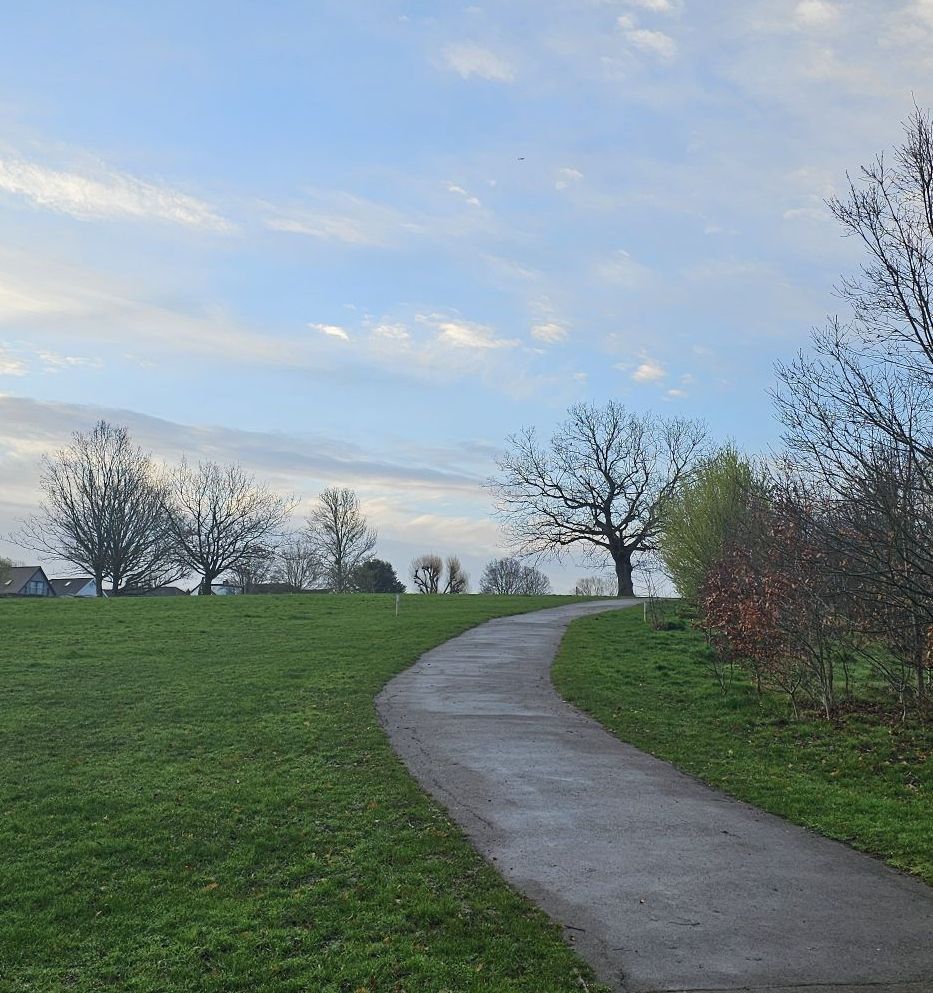
The grass is greener where you water it.

It’s funny how some phrases drift in and out of awareness and others just keep returning. This one seems to follow me around. It’s in The Way You See It, and yet it often feels as though it’s writing itself back into my life rather than the other way round.

I’ve been wondering about that. Why this one? Why now, again?

Lately the world feels loud. News alerts. Headlines. Opinions layered upon opinions. It’s hard not to absorb it all. Even if you try to keep a healthy distance it seeps in at the edges. A quick scroll turns into ten minutes. Ten minutes turns into a mood.

I’ve noticed it in myself. A tightening, a subtle sense that something, somewhere, is not quite right. And of course, in many places, that’s true. There is real hardship and fear playing out for real people. If you’re directly affected, it isn’t abstract. It’s immediate and deeply felt.

But for those of us watching from the outside there’s something else that can happen. We can become saturated. Not informed, saturated. And in that saturation it can start to feel as though everything is bleak, everywhere, all at once.

That’s when this quote seems to tap me gently on the shoulder.

The grass is greener where you water it.

Not in a dismissive way. Not as a way of pretending nothing is happening. More as a reminder of proportion, of agency.

I think about my own small patch of life. My family. The conversations around the dinner table. The way my daughter laughs when she’s telling a story she’s already told twice. The quiet satisfaction of a steady piece of work. The morning light through the kitchen window.

None of those things make the wider world disappear. But they are still here.

Where am I placing my attention? What am I watering?

It’s easy to believe that attention is neutral, that we’re simply “keeping up to date”. But I’m not sure that’s true – whatever I sit with tends to grow in my awareness. If I replay a difficult conversation in my head it expands. If I dwell on something I’m worried about it starts to colour everything else. Even small irritations can take on weight if I keep revisiting them.

And the opposite seems to be true as well.

If I linger a little longer on what’s steady, on what’s working, on what’s good, that begins to feel more real too. Not in a forced gratitude-list kind of way. Just in a noticing way.

When I wrote about this quote in the book I also mentioned that weeds grow where you water them. That felt important then and it still does. because the point isn’t to shame ourselves for having negative thoughts. They happen. They’re part of being human. The point, if there is one, is simply awareness.

Am I constantly fertilising the things that drain me?

Or am I giving at least some of that care to the parts of my life that nourish me?

There’s a balance here. I don’t want to be naïve or detached from reality. I want to be informed enough to make wise decisions – about travel, about safety and how I show up in the world. But I’m also learning that being perpetually plugged into fear doesn’t make me more responsible. It just makes me more anxious.

And when I’m anxious I’m not particularly useful to anyone.

I’ve had moments recently where I’ve felt that familiar pull towards doom and frustration. In the past I might have followed it all the way down. Argued with strangers in my head. Imagined worst-case scenarios. Let it spill into conversations at home.

Now, more often than not, I catch it a little earlier. Not perfectly, but earlier.

Ah. I’m watering that again.

It’s such an ordinary image, really. A watering can and a patch of grass. Nothing dramatic and no grand transformation overnight. Just steady tending, day after day.

Maybe that’s why the quote keeps returning. Because it isn’t asking for a radical overhaul. It’s asking for attention and care. For small, repeated choices about where to linger.

The grass is greener where you water it.

So perhaps the real question isn’t whether the world is turbulent. It clearly is. The question might be: within the square metre of life I actually touch each day, what am I choosing to nurture?

I don’t have a perfect answer. I still get pulled off course. I still find myself knee-deep in weeds from time to time.

But I’m noticing it more.

And for now, that feels like a start.

We’re All Right. Are We Alright?

Nuance.

That’s the word that’s been sitting with me this week.

I was listening to Trevor Noah on a podcast, and they were discussing the difference between being open to learning and taking up a position, planting a flag in it and then defending it at all costs. Not debating or exploring… just defending.

It stayed with me.

The idea that once we decide we’re right, we often stop being curious and gather evidence. We refine our lines and listen just enough to respond.

And yet, from our perspective, we are right.
That’s the part I keep returning to.

Sydney Banks talked about us living in separate realities. Not separate worlds physically but separate psychological ones – each of us experiencing life through our own thinking, based on our own history and interpretations.

If that’s true, then it makes sense that we feel right. I mean how could we not? We’re seeing what we’re seeing from where we’re standing.

So in that sense we’re all right.

Which makes the tone of so much public conversation feel even more curious because if we’re all right, why does it so often feel like we’re not alright?

Perhaps it hasn’t always been like this.

Maybe rose-tinted, maybe not but I have a sense that we once had more room for proper discourse. More back-and-forth that was about testing ideas rather than defending identities. Debate felt like debate. You could disagree robustly without it turning into a quiet sorting exercise of “with us” or “against us”.

Now it can feel as though positions harden quickly, as though there’s a subtle pressure to declare where you stand and stay there.

I don’t place myself outside of that. I’ve felt the pull of it too. There are moments when it’s tempting to tidy everything up into a clear stance and hold it firmly. There’s a certain neatness to certainty, like a kind of internal click when an argument lines up cleanly.

But over time, certainty has started to feel less solid to me than it once did. Not wrong, just heavier.

I still have views. I care about things. That hasn’t changed but what has shifted slowly, not dramatically, is my appreciation of how shaped those views are. How much they depend on the particular path I’ve walked and the assumptions I absorbed without noticing.

The older I get the more I see that my perspective is both real and partial. True to me, and incomplete.

And that recognition seems to open up a little more space than there used to be.

Nuance comes back into view.

Nuance says that two people can both be right from where they stand and still disagree. It makes room for the possibility that there is more here than my first reaction suggests.

And this is where the play on words keeps nudging me.

If we are all right, in the sense that our perspectives make sense to us, then perhaps we can be alright, too.

Alright with the fact that others see differently.
Alright with not converting them.
Alright with the space between positions.

That doesn’t mean abandoning conviction. It simply means recognising the limits of our own vantage point.

We’re all right.

And perhaps being alright together begins closer to home. In the way we listen at the dinner table. In how we respond when someone disagrees with us. In remembering that none of us sees the whole picture, only the version that makes sense from where we stand.

Two Hats on the Touchline

A reflection on roles, expectations, and what I noticed afterwards

I noticed something about myself on the touchline this weekend.

Not straight away. Not in the moment. Only later once the noise had died down and I’d had a bit of space to replay it quietly in my own head.

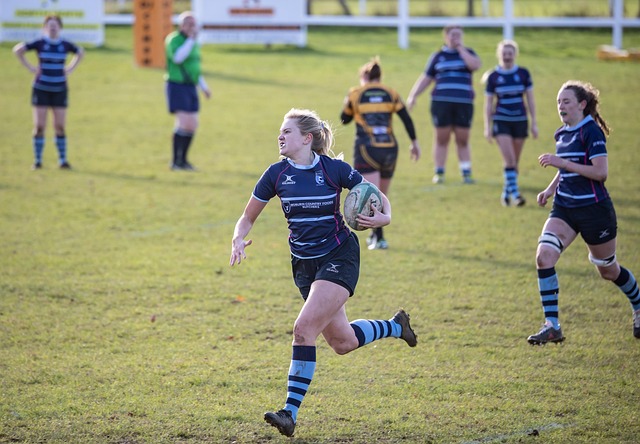
I was at my daughter’s rugby game watching from the side as I often do. As usual I wasn’t just there as a parent. I was also there as a coach to my daughter and her teammates. Two roles, worn at the same time, without much thought given to how that might shape what followed.

At first nothing felt unusual. The usual buzz. The familiar nerves. The sense of wanting things to go well – for her, for them, for all the effort that’s been put in over the weeks.

And then, at some point, there was a shift.

A decision didn’t go our way. A passage of play broke down. A moment that on another day might have passed without much reaction… didn’t.

I could feel the emotion rise before I really had time to question it. The frustration. The protectiveness. The weight of expectation… some of it spoken, most of it not.

By the time I noticed, it had already spilled over.

Nothing dramatic. No big scene. Just enough edge in my reactions to know, afterwards, that it probably wasn’t my best moment. And that whatever I was feeling wasn’t helping the girls play more freely or confidently.

We’re human, of course. I know that. But that doesn’t mean it doesn’t deserve a second look.

When I replayed it later what stood out wasn’t the rugby, it was the roles.

I’d turned up wearing two hats and hadn’t really noticed how tightly I was holding onto both. As a parent, I cared deeply. As a coach, I had opinions. Expectations. A sense of how things should look.

And somewhere in the middle of all that, I lost a bit of perspective.

What’s interesting is that the same afternoon offered a quiet contrast.

Earlier in the day, we’d put out a team made up largely of development players. Girls still finding their feet, still learning the rhythms of the game, still working things out in real time.

Watching that game felt different.

I noticed myself encouraging more. Smiling more. Seeing small wins where, in another context, I might have seen mistakes. The girls played with energy and freedom and I came away feeling genuinely good about what I’d seen – regardless of the scoreboard.

Then came the later game. More experienced players. More familiarity. More expectation… again, mostly unspoken.

And with that a different internal commentary.

I found myself more critical. Less patient. Reacting not just to what was happening, but to what I thought ought to be happening by now.

It didn’t take long for that to spiral, internally, at least. The game became heavier, and so did I.

Same pitch. Same sport. Same role on paper. Completely different experience.

That contrast has stayed with me.

It’s made me wonder how often our expectations quietly flavour our responses – not just in sport, but everywhere. How they can narrow what we notice, tighten how we react and pull us away from the simple enjoyment of what’s actually unfolding in front of us.

I don’t think I realised, in the moment, how much I was carrying into that second game. Or how little space I’d left for things to surprise me.

And I’m not writing this having neatly resolved it.

If anything, it’s left me more curious than certain.

About how easily we slip into roles without noticing.
About how quickly expectation turns into pressure… for ourselves and for others.
About how much lighter things feel when we allow ourselves to meet the moment as it is rather than as we think it should be.

There’s something humbling about noticing all this after the fact. About realising that insight often arrives once the whistle’s blown and everyone’s gone home.

Maybe that’s how it usually works.

We don’t spot these things while we’re in them. We notice them later when there’s a bit more quiet, a bit more honesty, a bit less need to perform a role well.

I’m still sitting with what it means to be both a parent and a coach in those moments. Still thinking about how to hold care without gripping too tightly. How to bring expectations lightly, or perhaps leave them at the gate altogether.

I don’t have an answer I’m confident in yet.

Just a growing sense that how we show up matters at least as much as what we’re showing up for.

And that noticing (even afterwards) might be a good place to start.

Nil–Nil Again

A Lesson in Resetting, Not Reacting

There’s a particular feeling that comes with heavy defeats. One try conceded turns into another… and another. Heads drop. Small frustrations begin to surface. Focus slips. The enjoyment drains away and the game starts to feel heavy – something to be endured rather than played. You can almost sense the players wishing the referee would blow the final whistle and bring it to an end.

At its core, rugby is a game of problem solving. And once the whistle goes, the only people who can solve those problems are the players on the pitch. As coaches, our role sits either side of that moment – between games and training sessions – thinking through what’s happening, what’s missing, and how we can equip players with options they can draw on for themselves between the four white lines.

Over the last couple of games, I’ve noticed something shift. Not dramatically. Not loudly. Just quietly clicking into place.

The basics are being done more consistently. That alone changes the feel of a game. It creates space – not just on the pitch, but in the players’ thinking. From there, more creative options start to appear. But this hasn’t been something imposed from the sidelines. The girls have found a growing sense of belief themselves. You see it in small, almost unremarkable moments; choosing to kick for touch from a penalty to gain territory, or calmly clearing from their own try line under pressure.

We’ve also paid attention to process. One small example is restarts. Previously, conceding often meant handing possession straight back with little pressure. We reshaped that process to give ourselves a better chance of competing – and suddenly those moments felt different. In the last game, we even scored directly from our own restart.

Before their latest match, we asked the girls to hold one simple idea: every score is a reset. Nil–nil again. Be the next team to score, regardless of what’s just happened. Focus on the next job.

When the final whistle went and we gathered in a huddle, the reaction said everything. The girls were genuinely surprised they’d won. Not because they didn’t care but because they’d been so absorbed in doing their jobs, fighting for each other and enjoying the process that the outcome had barely registered.

There will be times when awareness of the score matters. But I’ve found that in grassroots youth rugby enjoyment matters just as much, if not more. And when the weight of expectation eases, something lighter emerges: belief, openness and a freedom to play.

The girls have learned something over these last few weeks. And speaking for myself, so have I. Which is probably why I keep coaching. There’s always more to notice… and always more to learn.

As January Comes to a Close

We’ve reached the end of January.

I noticed it the other morning, standing in the kitchen, half-awake. Kettle on. Rain tapping against the window again. Nothing dramatic. Just the quiet realisation that the month was nearly done… and a small exhale I hadn’t realised I was holding.

January has a reputation doesn’t it. For some it feels like the longest month of the year, not just because it has 31 days, but because it can feel like it has far more. The festive lights come down. The inbox fills up. The weather turns grey. The promise of the new year starts to feel a little thinner.

Earlier in the month I wrote about “Sunshine Saturday” – that day the travel industry talks about, when bookings spike as people search for something to lighten the mood. I smiled when I read about it. Not because it’s wrong, but because it captures something familiar. When things feel heavy, we look for a horizon. Something ahead.

January can also carry a lot of pressure. Financial year ends. Reporting cycles. Getting back up to speed. Add the relentless rain and flooding we’ve seen in parts of the UK or the wildfires sweeping through parts of South Africa, and it’s easy to see why enthusiasm fades. We’re surrounded by jokes and memes about how grim it all is, and there’s a strange comfort in sharing that story together.

Standing there with my coffee I found myself wondering what happens when that becomes the only story we tell. That’s not to deny real difficulty, only to notice how easily a shared story can pile on top of whatever’s already there.

Not in a “think positive” way (I’ve never found that very useful) but in a quieter, more curious way. What are we paying attention to? What are we amplifying? And how much does that shape how this season feels from the inside?

I’ve noticed over time how people can be moving through similar seasons, yet experience them very differently. Not because one is doing life better than the other but because of the lens they’re looking through in that moment.

January seems to invite that noticing. When my attention settles on what’s missing, warmth, ease, momentum, the days feel long and heavy. When it shifts to what’s quietly moving, even imperfectly, the month softens. Not suddenly joyful, just less tight.

That doesn’t mean goals are always front and centre. Sometimes life pulls focus elsewhere. Work asks more. Family needs take priority. Energy dips. The neat plans we made at the turn of the year don’t unfold as imagined.

For me Built With Intention has never really been about fresh starts or dates in a diary. It’s more a way of noticing how I’m meeting whatever’s here. Whether I’m rushing or bracing. Trying to force clarity before it’s ready. Or allowing a little space for things to settle and show themselves.

Some days that comes easily. Other days, less so.

As January closes I find I’m less interested in whether the year is “on track”. More curious about how it feels to be in it. Where there’s unnecessary pressure. Where there might be room to ease off. Where attention could gently shift, not to fix anything but simply to see more clearly.

Maybe that’s a useful pause for you too. Not to take action or make a plan. Just to notice.

How does this season feel when you stop long enough to listen?