Blog

Don’t Let the Gap Scare You

I’ve always considered myself relatively fit. I played all sorts of sports for many years: squash, hockey, cycling, running, even BMX racing when I was much younger. So when I recently found myself out of shape, it felt like a bit of a jolt. The decline wasn’t sudden. It crept in slowly through minor injuries, missed workouts, and that classic excuse of “life getting in the way.” But deep down I know keeping fit is part of life not separate from it.

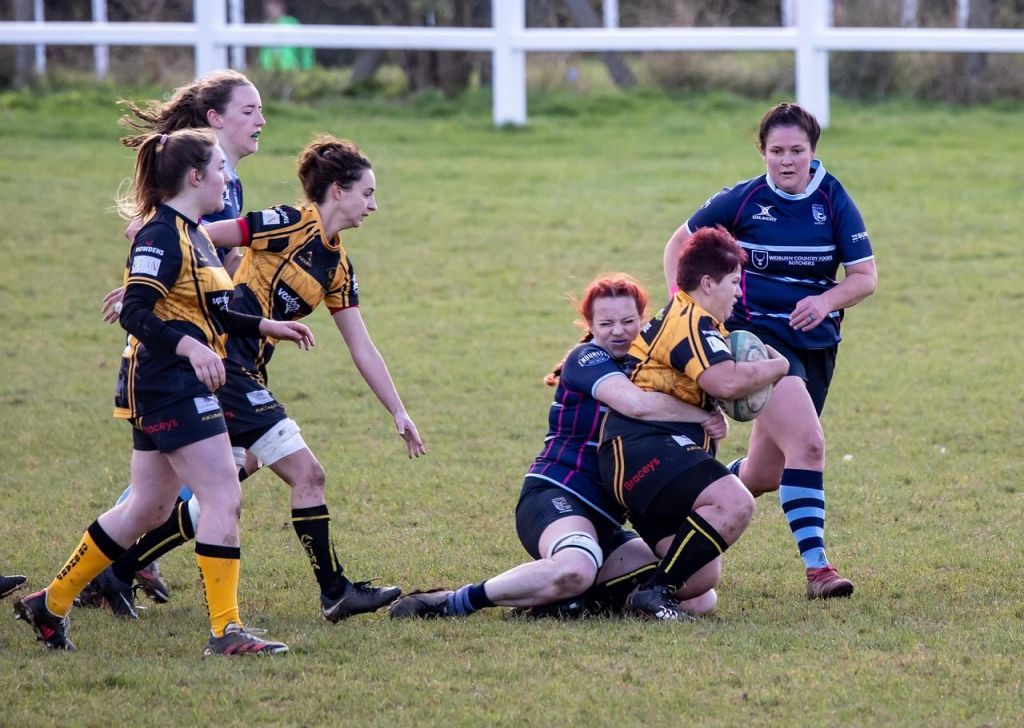
A few weeks ago I decided to get back into shape ahead of the new rugby season in September. I didn’t launch straight into a race or full-on training, I knew better than that. Instead, I gave myself a couple of weeks to build back up gradually. Some gentle runs, some consistency, just getting used to moving again. Then, once I felt ready, I lined up for my first Parkrun in years.

It was tough, surprisingly so. Despite starting near the back and going at a really easy pace (compared to my past efforts), I was out of breath early, legs heavy, rhythm gone. My time was well off my personal best from ten years ago. I shouldn’t have been surprised. Fitness fades, and I’m not exactly getting younger, but that didn’t make it any easier to accept. As Jeff Olson says in The Slight Edge, success is easy to do but also easy not to do, and for too long, I’d been in the “not to do” camp.

Still, I didn’t let that dismay turn into defeat. Two weeks later, I returned to Parkrun and ran a significantly faster time. Not back to peak levels, but a big chunk off nonetheless and enough to show progress was possible. That single improvement gave me a lift. It reminded me that although coming back can be humbling, it can also be very rewarding.

One thing struck me. At peak performance, progress is measured in fine margins. You’re trying to shave off seconds here and there, but when you’re rebuilding, improvements can come quickly, almost in chunks. There’s actually a name for this: diminishing returns. The better you get, the harder it is to improve, but early on, small efforts can create big changes.

That’s a comforting truth when you’re starting again. You’re not back at square one. You’re simply at a point where progress is visible and motivating if you choose to see it that way.

The key is to start with a clear target, set a plan, and then commit to the process. Not a heroic all-in-for-two-weeks burst. That usually ends in injury or burnout. What works is consistency. A sensible, progressive routine. One that your body can adapt to and your mind can stick with.

Every run, every rep, every decision to move rather than make excuses counts. They compound over time. When I look at the numbers – my improved Parkrun time, how much better I felt the second time round – I can’t help but feel encouraged. It’s a reminder that the work pays off, even if the gap between where you are and where you were feels daunting at first.

So if you’re in the same boat, coming back from time out, injury, or just feeling stuck, don’t let the gap scare you. See it for what it is: a space filled with opportunity. Set your goal, trust the plan, and keep showing up. The comeback might just become your best chapter yet.

Why You Shouldn’t Let Other People’s Failures Dictate Your Next Move

Photo by Miguel Á. Padriñán

Not long ago, I overheard two people at a coffee shop pulling apart someone’s new business idea. One had “tried something similar” and claimed it didn’t work. The other declared the whole thing “a scam” without much explanation. Within five minutes, they’d written off the idea completely, not based on facts, but on hearsay and a single disappointing experience.

I couldn’t help wondering how many promising ideas are left on the shelf because the loudest voices in the room happen to be the ones who quit early. It’s easy to let opinions like that shape our own thinking. But should they?

The problem with borrowed conclusions

When someone says they tried something and failed, it often sounds like a warning sign… but what does that failure really mean? Was it the concept itself, or the way it was executed? Did they give it a real go, or half-heartedly dabble? Were their expectations realistic?

People often draw firm conclusions from limited evidence and then share those conclusions freely. Unfortunately, when we accept them at face value we might talk ourselves out of an idea before we’ve even properly looked into it.

Before dismissing something because someone else gave up, ask yourself:

  • Have I heard from anyone who’s actually made it work?
  • Is this person’s experience even relevant to my situation?
  • What would I need to know to form my own opinion?

Try it, test it, then decide

Not every venture needs a full commitment up front. Some opportunities are well-suited to a test-and-learn approach: low-risk, relatively low-cost, and often flexible enough to try without upending your life. If you’re curious but unsure, starting small can be a great way to explore the potential.

Rather than asking “Will this work?” try asking “How could I test this without too much risk?”

For example:

  • Want to start offering a service? Offer it to one person or business first and ask for feedback.
  • Thinking about selling a product? Try a small online batch before investing in stock.
  • Considering a career shift? Take on a freelance project or shadow someone in the field.

But don’t just dive in blindly, set a few clear objectives. What would success look like in a month? In three months? What metrics or signs will help you decide whether to continue or pivot? That way even if it doesn’t take off the experience will still be valuable. You’ll have tested something with intention, rather than abandoning an idea based on someone else’s discouragement.

Curiosity over cynicism

There’s a big difference between healthy scepticism and automatic dismissal. One helps you make better decisions; the other blocks them altogether. Instead of letting a single bad review or a friend’s failed attempt become the whole story do your own research. Speak to people who’ve succeeded. Ask questions. Try something small. Learn as you go.

Even if you decide it’s not for you, you’ll know that based on your own insights and not someone else’s assumptions.

Final thought

Every success story starts with someone who gave it a go, often while others stood back and watched. You don’t have to ignore warning signs but don’t let them drown out possibilities either. There’s often more to gain by exploring than by shutting the door early. So if something sparks your interest, test it. Set your own markers. Be open to the fact that it might not work, but be equally open to the idea that it might.

It’s No Better to Be Safe Than Sorry

Why Bold Leaps Can Redefine Our Lives

“It’s no better to be safe than sorry.” That lyric from a-ha’s Take on Me has been playing on repeat in my mind lately, not just because it’s catchy, but because it challenges something deeply ingrained in many of us. For as long as I can remember, I’ve lived under the watchful gaze of two trusted sayings:

“It’s better to be safe than sorry.”
“Look before you leap.”

They were lovingly handed down by my parents and grandparents, and for the most part they helped shape a life rooted in caution, consideration, and care. But here’s the twist: some of the most life-defining, transformative choices I’ve made have flown in the face of them.

A Personal Story

Take, for instance, the decision to leave Zimbabwe – my homeland, my roots, my everything familiar.

I can still picture the scene vividly. We were gathered around the dinner table when I simply announced, with all the casual finality of someone discussing weekend plans, “I’m going to move to England.”

To say it surprised my parents would be an understatement. I’d given no indication. No drawn-out deliberations. No pros-and-cons lists. Just a declaration that came seemingly out of nowhere… and yet, from that moment on, the course of my life shifted.

Looking back, I’m not sure I’d thought it through in the traditional sense. But what I had was a gut-level certainty, a pull stronger than the voice of caution. Had I clung to those old adages, had I waited to be sure, to be “safe,” I might never have gone.

Exploring the Insight

There’s no denying the good intentions behind the conventional wisdom passed down to us. Most sayings like “look before you leap” come from a place of love… ancestors and elders who, in trying to protect us from harm, hoped to spare us pain. Yes, there’s real wisdom in that, but taken too literally, these ideas can become shackles.

Human progress has rarely been shaped by certainty. The explorers, the innovators, the pioneers – they didn’t wait until the path was proven or perfectly planned. They moved despite the risk, not because it was safe but because it mattered.

A Wider Reflection

There’s another quote that’s always stayed with me:

“A ship in harbour is safe, but that’s not what ships are built for.”

We weren’t built to stay tethered to the familiar, anchored in fear. We were made for movement, for trying, for stretching, for believing that even if the waters are choppy, we’ll find a way to sail.

That’s where a-ha’s lyric strikes a chord. It flips the age-old saying on its head. Because maybe it’s not always better to be safe than sorry. Maybe sometimes the real regret lies in not leaping when our heart is calling us forward.

Closing Encouragement

So the next time you’re standing at the edge of a decision, staring into the unknown, ask yourself: “Am I playing it safe because it’s wise… or because it’s comfortable?”

Take a breath. Take a beat. And then, maybe, just maybe, take the leap.

You might just find that you already have everything within you to face whatever comes. Not because it’s easy. Not because it’s safe. But because you’re ready.

When Progress Feels Just Out of Reach

Ever felt like you’re buzzing up against an invisible barrier, like a fly at a window? You can see your goal clearly… it’s just there! And yet, no matter how much effort you pour in, you can’t seem to get through.

I came across a brilliant metaphor in The Prosperous Coach that stopped me in my tracks: It’s like a fly buzzing up against a window.

That image stuck with me. The fly has all the energy and determination in the world. It can see the light, the open air, what it believes is freedom just inches away. But no matter how many times it hurls itself at the glass, it doesn’t break through. From our perspective, it’s obvious the fly is missing something. There’s probably an open door just a little to the left.

The fly doesn’t see it. It’s fixated. Stuck in the belief that more effort equals progress. Sound familiar?

When Pushing Harder Stops Working

This metaphor speaks to a feeling many of us know all too well: the frustration of doing everything right, following the steps, and still hitting a wall. You’ve had wins before. You’ve followed the playbook. You might even be modelling your actions on someone you admire who’s made it work. But this time, nothing’s shifting. You double down, push harder, try to work smarter but the resistance remains.

It’s maddening… and exhausting.

Here’s the truth: most of the time, it’s not a skills gap or a lack of willpower. It’s that we’re stuck in a particular way of seeing the situation and no amount of effort will solve what actually requires a shift in perspective.

Insight Needs Breathing Room

Some of our clearest moments of thinking don’t come at our desks. They arrive when we least expect them: in the shower, on a walk, while driving, or just after we’ve stopped trying to “solve” the problem.

I’ve learned to value these “insight-friendly” spaces. They’re the environments, mental or physical, where clarity tends to find us, not the other way around. Over time, I’ve come to recognise one of the most consistent insight-friendly spaces in my life: coaching.

When I bring a problem to a coaching conversation, I’m not expecting a step-by-step solution. I’m inviting reflection. Often, the simple act of speaking aloud, of articulating what feels messy, allows me to see it more clearly. My coach reflects, gently probes, or simply holds space… and gradually, the tangle starts to loosen.

What felt like a fixed obstacle often reveals itself as something more navigable: a mindset I hadn’t noticed, an assumption I’d mistaken for fact, or a pressure I’d unconsciously accepted. I don’t walk away with a checklist. I walk away with clarity and from there, new possibilities tend to open up.

The Value of Slowing Down

In our productivity-obsessed world, slowing down can feel like weakness or wasted time. But when we’re stuck, slowing down is often the smartest, most strategic thing we can do.

It allows us to step back and question what’s really going on. Is this goal still aligned with what matters most to me? Have I made assumptions I haven’t tested? Am I solving the right problem?

This isn’t about giving up. It’s about pausing long enough to look around… and maybe spot the open door.

What to Try When You’re Stuck

Here are a few practical ideas for those “buzzing at the window” moments:

  • Step away from the problem: Changing your physical space can disrupt your mental loops. Take a walk, switch locations, or give yourself a day off from thinking about it.
  • Speak it out loud: Whether with a coach, a trusted friend, or even to your journal, naming what’s going on helps loosen its hold.
  • Ask better questions: Instead of “Why isn’t this working?”, try “What else could this mean?”, “What am I not seeing?”, or “Where else might progress be hiding?”
  • Trust in insights: They often arrive when you stop chasing them. Let your mind wander. Give it room to breathe.
  • Remember past stuck moments: Think back to a time when you were blocked but eventually found your way forward. What helped then? What conditions made that insight possible?

Final Thoughts

That image of the fly is one I’ll carry with me. Because I’ve been that fly – many times. Maybe you have too. It doesn’t mean we’re foolish. It means we’re human. It means we care deeply about moving forward. Sometimes so much that we forget to look around!

There’s usually a way forward, but it often isn’t through force or more effort. It’s through seeing differently. That starts with slowing down, letting go of rigid plans, and making space for something new to arise.

If you’re feeling stuck, it might not be about doing more. It might be time to pause, reflect. and gently look around for the open door. If you’d like a space to do just that, coaching could be a valuable place to start.

Feel free to reach out if you’re curious.

Target Practice: Why Goals Matter

Photo by Mikhail Nilov: https://www.pexels.com/photo/arrow-on-the-target-6620413/

The other morning, over a cup of coffee and a quiet moment before the day kicked off, I caught part of a radio interview with a politician. She was being asked about her party’s position on certain targets, and she flatly refused to commit to any. Her reasoning? According to her, when in power, the opposition had set plenty of targets that they never met… they changed them constantly. Her implication was clear: if that was acceptable then, why should she bother setting any now?

This isn’t a political post, not even close. But the conversation stuck with me and it got me thinking: if targets can be so easily missed, manipulated, or dismissed, what’s the point of having them?

Turns out, quite a lot.

Targets: A Framework for Focus

The way I see it, targets aren’t about perfection, they’re about direction.

When you set a target, you’re declaring an intention. You’re choosing to move in a particular direction, with a clear point in sight. It might be ambitious, maybe even uncomfortable, but it’s there to guide your decisions and behaviours.

Think of it like heading out on a walk. If you know you’re aiming for the top of a hill, you can figure out which path to take, how much time you’ll need, and when to pause for breath. Without that destination in mind, you might wander, enjoy the scenery, but never really get anywhere.

A Personal Reflection: Running with Purpose

I’ve seen the impact of targets most clearly in my own life when I’ve had something concrete to work towards. Take running, for example.

The times I’ve set myself a goal, say preparing for a 10-mile race, everything changes. I find myself planning runs into my week, thinking more consciously about my diet, sleep, and energy levels. I start measuring progress, taking note of improvements, and feeling a growing sense of momentum.

Compare that to the times when I’ve simply said, “I want to run more.” With no specific race or target in mind, it’s all too easy to skip a session. One missed run becomes two. A busy week becomes an excuse. Before I know it, a month has passed and I’m back at square one.

It’s not that I’m lazy or unmotivated, it’s that I didn’t give myself anything to aim for.

Why We Avoid Setting Goals

There’s often hesitation around targets, and it’s not hard to see why.

Targets can feel rigid and unforgiving. We’ve all experienced the disappointment of falling short.  But avoiding targets out of fear of failure is like avoiding maps in case you get lost. The goal isn’t to follow the path perfectly, it’s to have something to refer back to when you go off course.

Even when we don’t meet our goals, the very act of setting them can give us clarity, momentum, and learning. Sometimes that’s more valuable than hitting the mark precisely.

How to Set Better Targets

If setting goals feels like a chore or a trap, try reframing how you approach them. Here are a few principles that can help:

  1. Make them meaningful: Set goals that align with what matters to you. If a target feels imposed or irrelevant, it won’t stick.
  2. Break them down: Big goals can be overwhelming. Break them into manageable steps or milestones to build confidence and track progress.
  3. Expect detours: Progress is rarely linear. Allow for flexibility. Life will happen, and that’s okay. The goal is direction, not perfection.
  4. Review and adjust: Check in regularly. Are you still aiming at the right thing? Has the context changed? Targets can evolve – that’s not a failure, it’s wise responsiveness.

Pause and Reflect

Take a moment to think about something you’ve been meaning to do. Maybe it’s health-related. Maybe it’s a personal project or a professional ambition.

  • What would happen if you turned it into a clear, specific goal?
  • How would that change your focus and your behaviour this week?
  • What’s stopping you from setting that target now?

Final Thoughts

It’s easy to become cynical about targets, especially when they’re misused or missed. But writing off goals altogether is a mistake. A well-set target doesn’t box us in, it opens us up to progress, intention, and the satisfaction of moving with purpose.

You don’t need to shout your targets from the rooftops, but setting them quietly, intentionally, and with a sense of commitment can make a world of difference. Not just in what you achieve, but in how you show up along the way.