Blog

It’s No Better to Be Safe Than Sorry

Why Bold Leaps Can Redefine Our Lives

“It’s no better to be safe than sorry.” That lyric from a-ha’s Take on Me has been playing on repeat in my mind lately, not just because it’s catchy, but because it challenges something deeply ingrained in many of us. For as long as I can remember, I’ve lived under the watchful gaze of two trusted sayings:

“It’s better to be safe than sorry.”
“Look before you leap.”

They were lovingly handed down by my parents and grandparents, and for the most part they helped shape a life rooted in caution, consideration, and care. But here’s the twist: some of the most life-defining, transformative choices I’ve made have flown in the face of them.

A Personal Story

Take, for instance, the decision to leave Zimbabwe – my homeland, my roots, my everything familiar.

I can still picture the scene vividly. We were gathered around the dinner table when I simply announced, with all the casual finality of someone discussing weekend plans, “I’m going to move to England.”

To say it surprised my parents would be an understatement. I’d given no indication. No drawn-out deliberations. No pros-and-cons lists. Just a declaration that came seemingly out of nowhere… and yet, from that moment on, the course of my life shifted.

Looking back, I’m not sure I’d thought it through in the traditional sense. But what I had was a gut-level certainty, a pull stronger than the voice of caution. Had I clung to those old adages, had I waited to be sure, to be “safe,” I might never have gone.

Exploring the Insight

There’s no denying the good intentions behind the conventional wisdom passed down to us. Most sayings like “look before you leap” come from a place of love… ancestors and elders who, in trying to protect us from harm, hoped to spare us pain. Yes, there’s real wisdom in that, but taken too literally, these ideas can become shackles.

Human progress has rarely been shaped by certainty. The explorers, the innovators, the pioneers – they didn’t wait until the path was proven or perfectly planned. They moved despite the risk, not because it was safe but because it mattered.

A Wider Reflection

There’s another quote that’s always stayed with me:

“A ship in harbour is safe, but that’s not what ships are built for.”

We weren’t built to stay tethered to the familiar, anchored in fear. We were made for movement, for trying, for stretching, for believing that even if the waters are choppy, we’ll find a way to sail.

That’s where a-ha’s lyric strikes a chord. It flips the age-old saying on its head. Because maybe it’s not always better to be safe than sorry. Maybe sometimes the real regret lies in not leaping when our heart is calling us forward.

Closing Encouragement

So the next time you’re standing at the edge of a decision, staring into the unknown, ask yourself: “Am I playing it safe because it’s wise… or because it’s comfortable?”

Take a breath. Take a beat. And then, maybe, just maybe, take the leap.

You might just find that you already have everything within you to face whatever comes. Not because it’s easy. Not because it’s safe. But because you’re ready.

When Progress Feels Just Out of Reach

Ever felt like you’re buzzing up against an invisible barrier, like a fly at a window? You can see your goal clearly… it’s just there! And yet, no matter how much effort you pour in, you can’t seem to get through.

I came across a brilliant metaphor in The Prosperous Coach that stopped me in my tracks: It’s like a fly buzzing up against a window.

That image stuck with me. The fly has all the energy and determination in the world. It can see the light, the open air, what it believes is freedom just inches away. But no matter how many times it hurls itself at the glass, it doesn’t break through. From our perspective, it’s obvious the fly is missing something. There’s probably an open door just a little to the left.

The fly doesn’t see it. It’s fixated. Stuck in the belief that more effort equals progress. Sound familiar?

When Pushing Harder Stops Working

This metaphor speaks to a feeling many of us know all too well: the frustration of doing everything right, following the steps, and still hitting a wall. You’ve had wins before. You’ve followed the playbook. You might even be modelling your actions on someone you admire who’s made it work. But this time, nothing’s shifting. You double down, push harder, try to work smarter but the resistance remains.

It’s maddening… and exhausting.

Here’s the truth: most of the time, it’s not a skills gap or a lack of willpower. It’s that we’re stuck in a particular way of seeing the situation and no amount of effort will solve what actually requires a shift in perspective.

Insight Needs Breathing Room

Some of our clearest moments of thinking don’t come at our desks. They arrive when we least expect them: in the shower, on a walk, while driving, or just after we’ve stopped trying to “solve” the problem.

I’ve learned to value these “insight-friendly” spaces. They’re the environments, mental or physical, where clarity tends to find us, not the other way around. Over time, I’ve come to recognise one of the most consistent insight-friendly spaces in my life: coaching.

When I bring a problem to a coaching conversation, I’m not expecting a step-by-step solution. I’m inviting reflection. Often, the simple act of speaking aloud, of articulating what feels messy, allows me to see it more clearly. My coach reflects, gently probes, or simply holds space… and gradually, the tangle starts to loosen.

What felt like a fixed obstacle often reveals itself as something more navigable: a mindset I hadn’t noticed, an assumption I’d mistaken for fact, or a pressure I’d unconsciously accepted. I don’t walk away with a checklist. I walk away with clarity and from there, new possibilities tend to open up.

The Value of Slowing Down

In our productivity-obsessed world, slowing down can feel like weakness or wasted time. But when we’re stuck, slowing down is often the smartest, most strategic thing we can do.

It allows us to step back and question what’s really going on. Is this goal still aligned with what matters most to me? Have I made assumptions I haven’t tested? Am I solving the right problem?

This isn’t about giving up. It’s about pausing long enough to look around… and maybe spot the open door.

What to Try When You’re Stuck

Here are a few practical ideas for those “buzzing at the window” moments:

  • Step away from the problem: Changing your physical space can disrupt your mental loops. Take a walk, switch locations, or give yourself a day off from thinking about it.
  • Speak it out loud: Whether with a coach, a trusted friend, or even to your journal, naming what’s going on helps loosen its hold.
  • Ask better questions: Instead of “Why isn’t this working?”, try “What else could this mean?”, “What am I not seeing?”, or “Where else might progress be hiding?”
  • Trust in insights: They often arrive when you stop chasing them. Let your mind wander. Give it room to breathe.
  • Remember past stuck moments: Think back to a time when you were blocked but eventually found your way forward. What helped then? What conditions made that insight possible?

Final Thoughts

That image of the fly is one I’ll carry with me. Because I’ve been that fly – many times. Maybe you have too. It doesn’t mean we’re foolish. It means we’re human. It means we care deeply about moving forward. Sometimes so much that we forget to look around!

There’s usually a way forward, but it often isn’t through force or more effort. It’s through seeing differently. That starts with slowing down, letting go of rigid plans, and making space for something new to arise.

If you’re feeling stuck, it might not be about doing more. It might be time to pause, reflect. and gently look around for the open door. If you’d like a space to do just that, coaching could be a valuable place to start.

Feel free to reach out if you’re curious.

Target Practice: Why Goals Matter

Photo by Mikhail Nilov: https://www.pexels.com/photo/arrow-on-the-target-6620413/

The other morning, over a cup of coffee and a quiet moment before the day kicked off, I caught part of a radio interview with a politician. She was being asked about her party’s position on certain targets, and she flatly refused to commit to any. Her reasoning? According to her, when in power, the opposition had set plenty of targets that they never met… they changed them constantly. Her implication was clear: if that was acceptable then, why should she bother setting any now?

This isn’t a political post, not even close. But the conversation stuck with me and it got me thinking: if targets can be so easily missed, manipulated, or dismissed, what’s the point of having them?

Turns out, quite a lot.

Targets: A Framework for Focus

The way I see it, targets aren’t about perfection, they’re about direction.

When you set a target, you’re declaring an intention. You’re choosing to move in a particular direction, with a clear point in sight. It might be ambitious, maybe even uncomfortable, but it’s there to guide your decisions and behaviours.

Think of it like heading out on a walk. If you know you’re aiming for the top of a hill, you can figure out which path to take, how much time you’ll need, and when to pause for breath. Without that destination in mind, you might wander, enjoy the scenery, but never really get anywhere.

A Personal Reflection: Running with Purpose

I’ve seen the impact of targets most clearly in my own life when I’ve had something concrete to work towards. Take running, for example.

The times I’ve set myself a goal, say preparing for a 10-mile race, everything changes. I find myself planning runs into my week, thinking more consciously about my diet, sleep, and energy levels. I start measuring progress, taking note of improvements, and feeling a growing sense of momentum.

Compare that to the times when I’ve simply said, “I want to run more.” With no specific race or target in mind, it’s all too easy to skip a session. One missed run becomes two. A busy week becomes an excuse. Before I know it, a month has passed and I’m back at square one.

It’s not that I’m lazy or unmotivated, it’s that I didn’t give myself anything to aim for.

Why We Avoid Setting Goals

There’s often hesitation around targets, and it’s not hard to see why.

Targets can feel rigid and unforgiving. We’ve all experienced the disappointment of falling short.  But avoiding targets out of fear of failure is like avoiding maps in case you get lost. The goal isn’t to follow the path perfectly, it’s to have something to refer back to when you go off course.

Even when we don’t meet our goals, the very act of setting them can give us clarity, momentum, and learning. Sometimes that’s more valuable than hitting the mark precisely.

How to Set Better Targets

If setting goals feels like a chore or a trap, try reframing how you approach them. Here are a few principles that can help:

  1. Make them meaningful: Set goals that align with what matters to you. If a target feels imposed or irrelevant, it won’t stick.
  2. Break them down: Big goals can be overwhelming. Break them into manageable steps or milestones to build confidence and track progress.
  3. Expect detours: Progress is rarely linear. Allow for flexibility. Life will happen, and that’s okay. The goal is direction, not perfection.
  4. Review and adjust: Check in regularly. Are you still aiming at the right thing? Has the context changed? Targets can evolve – that’s not a failure, it’s wise responsiveness.

Pause and Reflect

Take a moment to think about something you’ve been meaning to do. Maybe it’s health-related. Maybe it’s a personal project or a professional ambition.

  • What would happen if you turned it into a clear, specific goal?
  • How would that change your focus and your behaviour this week?
  • What’s stopping you from setting that target now?

Final Thoughts

It’s easy to become cynical about targets, especially when they’re misused or missed. But writing off goals altogether is a mistake. A well-set target doesn’t box us in, it opens us up to progress, intention, and the satisfaction of moving with purpose.

You don’t need to shout your targets from the rooftops, but setting them quietly, intentionally, and with a sense of commitment can make a world of difference. Not just in what you achieve, but in how you show up along the way.

Beyond the Pitch: Strengthening the Rugby Circle

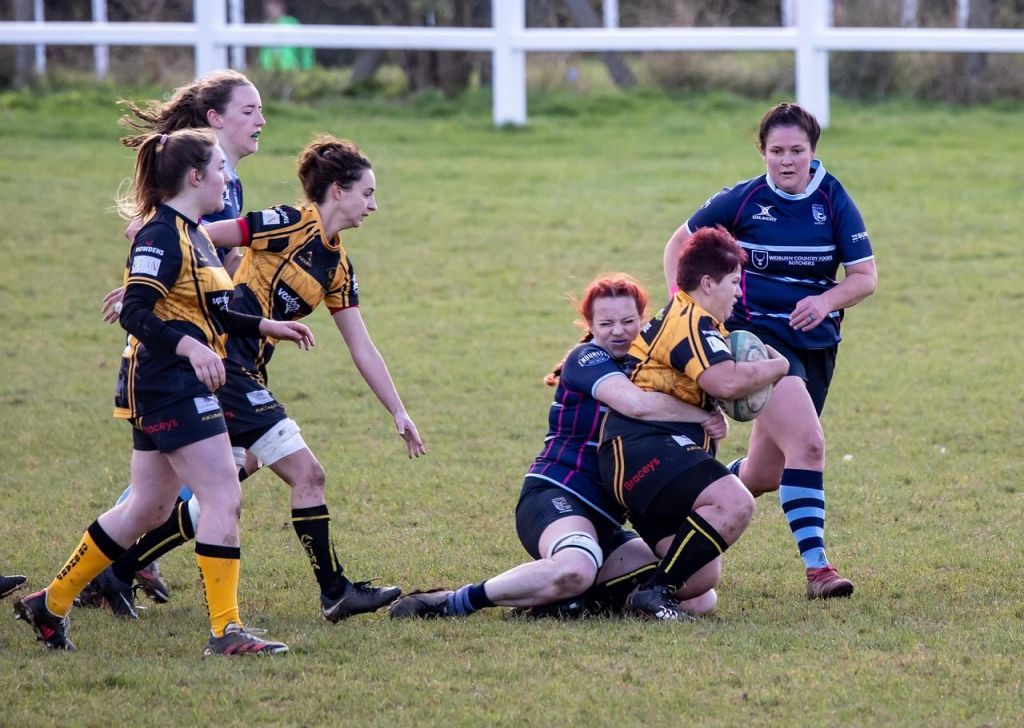
With the season having ended, I’ve enjoyed looking back at everything we achieved. The ups, the downs, the uncertain first steps as a collaborative squad… and the way the team gradually gelled into something really special. From hesitant beginnings to moments of fantastic teamwork, from new friendships formed to individual breakthroughs on and off the pitch, it’s been a journey full of growth and connection. What started as two clubs joining forces became something much more: a unified group with shared values, mutual respect, and a real sense of belonging.

What’s really struck me, though, is just how much of what made this season meaningful happened beyond the pitch. Yes, we trained hard and gave our all on match days, but it was the conversations during water breaks, the laughs shared between drills, and the post-match debriefs with fellow coaches that left a lasting impression. Those moments are where trust was built. Where the team’s identity began to form. Where rugby became the vehicle, but not the sole focus.

The relationships with parents were a big part of this, too. Whether it was cheering from the sidelines, stepping in to help with logistics, or simply offering a word of encouragement, they brought warmth and support that made a difference. This kind of grassroots sport thrives on those contributions, big and small, and I’m grateful for every one.

Then there’s the coaching team. Collaborating across clubs meant bringing different perspectives, ideas, and styles. But it also meant choosing to work as one, to support one another, stay aligned, and present a united front for the girls. That mutual respect and open communication became a foundation not just for the players but for us as coaches, too.

As I reflect, I’m reminded again why I love being involved in youth rugby. It’s about more than the sport. It’s about community, about learning how to be part of something bigger than yourself, about discovering what it means to contribute, to lift others up, to grow through challenge.

Rugby, like all sport, is a microcosm of life. In that small world, we get to practise some of the big stuff: resilience, leadership, kindness, humility, and belief.

That’s what makes a season like this so special. Not just the tries scored or games won, but the people it brought together, and the impact that will last long after the final whistle. That’s the beauty of it all.

Bring on next season!

Looking Through a New Lens

The Power of Video Feedback

This season we introduced a new tool to our coaching… video analysis. For some of our games we were able capture match footage from a perspective none of us usually get: from above, detached from the noise, and clear enough to spot the patterns, the positioning, the little moments that matter.

At this age group, players rarely get to see themselves in action. They feel the tackles, the runs, the frustration, the joy, but they don’t often get to step back and observe their game like we do from the sidelines. Introducing video gave us, and more importantly the players, a fresh lens through which to reflect and learn.

We didn’t clip specific moments or create highlight reels, we simply shared the full game footage with the players and parents after matches. It was there if they wanted to revisit moments, spot patterns, or just relive the game. We kept it low-key, not overloading the girls with instruction or expectations, just giving them access and space.

The exception came after that first game they won, where everything really clicked, a turning point where belief visibly landed in the group. We decided to sit down as a team and watch the game together. It wasn’t about analysis or corrections. It was about celebrating what they had achieved. We wanted the girls to see themselves in action: how they moved as a unit in defence, their hunger to win back possession, the support lines they ran, and the intensity with which they played. It became a shared moment of pride and insight.

During that session, the girls noticed things they hadn’t in the moment. Moments of skill, teamwork, and determination. They also saw the game from our perspective as coaches, the patterns that don’t always feel obvious when you’re in the thick of the action. It gave us a chance to praise their efforts in a different way and to open up space for them to highlight what they saw in each other’s play too.

That session felt like a shift. The players left more confident, more connected to the game and to each other. It was no longer just about how it felt out there, they’d seen themselves succeed, and that’s powerful. It made things stick in a new way.

Video feedback won’t replace time on the pitch or the lessons of effort and repetition, but it has added another layer of learning. One we’ll certainly keep building on in seasons to come.

Key takeaway: Sometimes the most powerful feedback is simply giving players the chance to see themselves. A new perspective can deepen belief and unlock learning in unexpected ways.

Coaching reflection: What could your players discover if they saw what you see? How might it shift their understanding of their game, and of themselves?