Don’t Believe Everything You Think

Photo by Pham Ngoc Anh: https://www.pexels.com/photo/people-standing-on-rock-formation-near-the-sea-13900922/

We were swimming in the sea off the coast of Croatia, wading out towards a sandbank that shimmered in the distance. The water was calm and no deeper than waist height, the sun beating down and everyone enjoying the moment, until my daughter stopped suddenly. She looked ahead and then back at us before announcing she didn’t want to go any further. In her mind it was now too far and too dangerous.

No matter how many ways we tried to explain that the water wouldn’t get any deeper she was no longer hearing reassurance. Her thoughts had set in: this is not safe. In that moment, no amount of facts would change her experience.

That small moment was a vivid example of how our perception becomes our reality. Even when what we believe doesn’t match the facts, it still feels true and we behave accordingly.

But here’s the thing. Our thoughts can also get us moving. Two days later, that same daughter stood at the edge of a cliff ledge, around eight metres above the sea… and jumped. No one pushed or coaxed her, it was a decision she made, fuelled by a new story in her mind. She’d seen others do it safely. She felt ready. She chose to trust the thrill over the fear. Same person, different moment, different thoughts, and a completely different outcome.

As a coach, I see this kind of shift all the time. Clients bring me challenges that, on the surface, seem concrete. They’ll say “This will never work” or “I’ve failed at this before” or “There’s nothing I can do”. Those thoughts feel utterly convincing. But when we pause and examine them, we often discover they’re not rooted in certainty. They’re rooted in fear, habit or a narrow viewpoint.

The quote “Don’t believe everything you think” by Allan Lokos speaks directly to this. Our minds are brilliant at generating thoughts, but not all of them are useful or accurate. When we mistake every thought for truth, we limit ourselves, whether that’s in the sea, at work or in life more broadly.

I’ve learned to catch myself too. It’s easy to hold tight to the belief that my version of a situation is the right one. But in truth, it’s just my version shaped by my past, my outlook and my current state of mind. That doesn’t make it wrong, but it certainly doesn’t make it the only valid perspective.

In coaching conversations, one of the most powerful shifts often comes from asking a simple question: “What else could be true here?” It doesn’t mean dismissing your feelings or denying your experience. It just opens the door to fresh thinking. When we’re open to that we start to spot options and opportunities we’d otherwise miss.

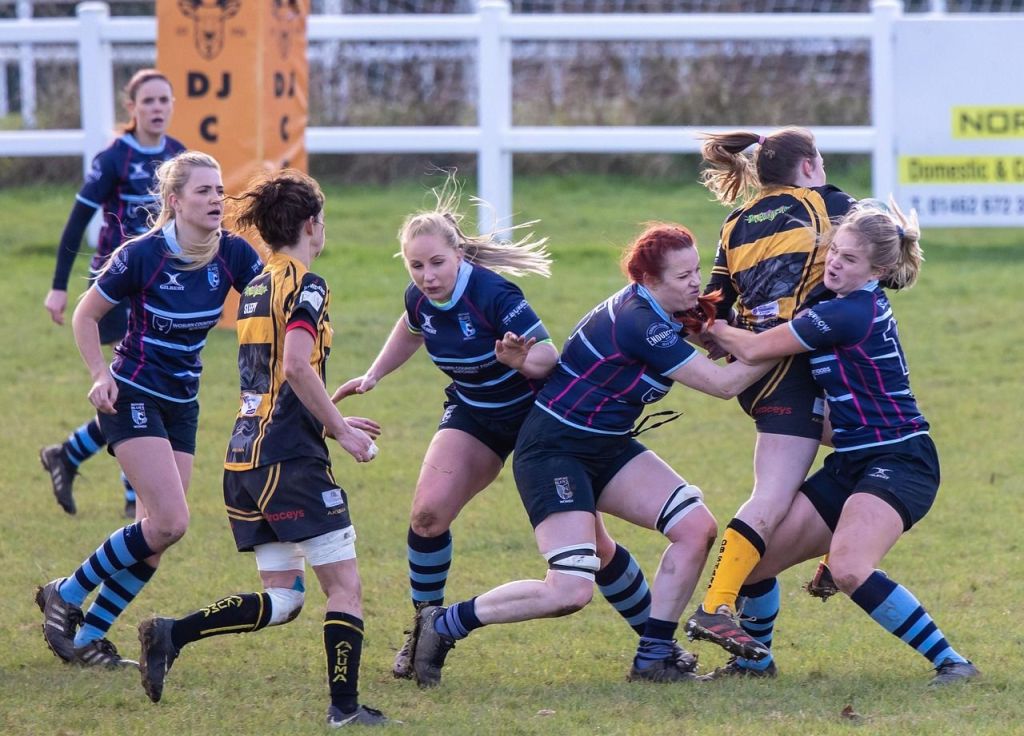
This mindset is just as relevant on the rugby pitch, where I coach youth teams. One player might believe they’ve failed because they missed a tackle. Another might be certain the coach is disappointed in them. Often, these thoughts aren’t voiced – they’re carried silently, affecting confidence and performance. Helping young players explore different ways of seeing the same situation is part of the learning process. It’s not about pretending everything’s fine, but about understanding that our thoughts are only one version of events.

So, what’s the takeaway? Start noticing your thoughts, especially the ones that shut things down. When you hear yourself saying “I can’t”, “That’s not possible” or “They must think…”, pause. Ask: Is that really true? Could there be another way to see this?

You don’t have to believe every thought that shows up. You can hold them lightly, explore them and decide what serves you best. That simple habit can be the difference between staying stuck and moving forward, whether you’re facing a work dilemma, coaching a team or standing at the edge of a cliff, wondering whether you dare to jump.

Debate to Learn, Not Win

Why keeping an open mind is more powerful than proving a point

Photo by Henri Mathieu-Saint-Laurent

I came across a comment on a podcast episode recently that really made me pause. Someone had described one of the panel members as “debating to win, not to learn.” It struck a chord, not because I agreed with every point made in the episode (in fact, some rubbed up against my own views), but because I realised that’s exactly what good debate should be about: not winning, but learning.

There’s something incredibly powerful about being able to sit with a perspective that challenges your own. As Aristotle said, “It is the mark of an educated mind to be able to entertain a thought without accepting it.” These days, though, that mindset feels increasingly rare. We live in a time of echo chambers, where algorithms serve us content we already agree with and social feeds reinforce our beliefs. Exposure to different views has become something we almost have to seek out intentionally.

Of course, that’s not always comfortable. When someone presents an argument that jars with your values or world view, your instinct might be to push back or shut down. That’s natural. But if we go into a conversation with the aim of defending our position at all costs we shut the door on growth. We don’t give ourselves the chance to understand the nuances or lived experiences behind other perspectives, and perhaps more importantly, we don’t allow the other person to feel heard… which means they probably won’t listen to us either.

I think a lot about every time there’s a round of political debates. Increasingly, they seem less about exploring ideas and more about scoring points. Leaders avoid meaningful conversations with their opponents for fear of appearing weak or inconsistent. But how can we expect progress if those in power refuse to engage with differences in a meaningful way? Disagreement doesn’t have to be hostile. In fact, handled well, it can be constructive and even connective.

Debating to learn starts with curiosity. Instead of asking “How can I prove them wrong?” we ask, “What might I be missing here?” or “Why does this issue matter so much to them?” It’s not about agreeing with everything it’s about gaining insight into another way of thinking. That mindset also makes space for us to change our own views, should new information or experiences warrant it. Flexibility isn’t weakness; it’s wisdom.

In practical terms, it helps to approach conversations with a few ground rules in mind:

  • Listen without interrupting.
  • Ask questions that clarify rather than challenge.
  • Avoid assuming bad intent.
  • Let go of the need to have the last word.

These aren’t just good habits for political or intellectual debates they apply just as much at work, at home or even in the car with a teenager. Learning to listen with respect and patience helps build stronger relationships, better teams and ultimately a more thoughtful society.

So next time you find yourself in a disagreement, big or small, try asking yourself what you can learn, rather than what you need to prove. We might not all agree, but we can all grow if we stay open to the conversation.

Stuck? Ask yourself: “What’s the extra camel?”

Photo by Frans van Heerden

A few years ago, I sat in our local church with my daughters during an all-age service. The pastor told a story that I was reminded of again recently. It wasn’t dramatic or ground-breaking, but it stuck with me, partly because it captured something I’d often seen but never quite found words for.

It was a story about three brothers, their late father’s will, and 17 camels. The father, a wealthy man, had left clear instructions in his will:

  • The eldest son would receive half the camels
  • The middle son would receive one-third
  • The youngest was to receive one-ninth

The sons were content… until they tried to divide up the camels – half of 17 is 8.5, a third is just under 6, and a ninth is a little under 2. No one wanted to cut a camel in half, and no one was willing to accept less than their fair share. They reached a deadlock with each brother protecting his own interests and growing increasingly frustrated.

Then a wise man arrived. Seeing their predicament, he offered his one and only camel to add to the herd. With 18 camels now in total, the maths worked:

  • The eldest got 9
  • The middle son 6
  • The youngest 2

That’s 17 camels. The wise man took back his own camel and walked away with everyone happy!

There’s something beautifully simple about this tale, yet the message is profound. In everyday life, particularly when money, time or pride are involved, it’s easy to get stuck in a “what’s in it for me” mindset. We defend our ground, cling to fractions of things we don’t want to let go of and lose sight of solutions that lie just beyond the obvious.

The story reminds us that problems often feel unsolvable, not because they truly are but because we’re looking at them through a narrow lens. We assume that compromise means loss and that helping others get what they need means giving up on what we need. But what if the opposite is true?

Sometimes the solution is simply to step back, bring in a new perspective or add something to the mix, even temporarily, to create clarity. The wise man in the story wasn’t personally caught up in the dispute, so he could see the bigger picture. That distance gave him insight the brothers didn’t have.

This happens in teams, families and organisations all the time. We get stuck in binary thinking: either I win or you do, but not both of us. What if, like the wise man, we introduce something new, not to give something up permanently, but to unlock a better outcome? That might mean adding a resource, offering a fresh idea or simply being willing to shift the focus from what’s fair on paper to what actually works in practice.

Of course, stepping back is hard when emotions run high or when stakes feel personal, but that’s often when it matters most.

So here’s the takeaway: when faced with a tricky situation, ask yourself, “what’s the extra camel?” What small addition or shift in mindset might break the deadlock? Can you see beyond the fractions and find a whole?

You might just solve the problem without sacrificing a thing.

Don’t Let the Gap Scare You

I’ve always considered myself relatively fit. I played all sorts of sports for many years: squash, hockey, cycling, running, even BMX racing when I was much younger. So when I recently found myself out of shape, it felt like a bit of a jolt. The decline wasn’t sudden. It crept in slowly through minor injuries, missed workouts, and that classic excuse of “life getting in the way.” But deep down I know keeping fit is part of life not separate from it.

A few weeks ago I decided to get back into shape ahead of the new rugby season in September. I didn’t launch straight into a race or full-on training, I knew better than that. Instead, I gave myself a couple of weeks to build back up gradually. Some gentle runs, some consistency, just getting used to moving again. Then, once I felt ready, I lined up for my first Parkrun in years.

It was tough, surprisingly so. Despite starting near the back and going at a really easy pace (compared to my past efforts), I was out of breath early, legs heavy, rhythm gone. My time was well off my personal best from ten years ago. I shouldn’t have been surprised. Fitness fades, and I’m not exactly getting younger, but that didn’t make it any easier to accept. As Jeff Olson says in The Slight Edge, success is easy to do but also easy not to do, and for too long, I’d been in the “not to do” camp.

Still, I didn’t let that dismay turn into defeat. Two weeks later, I returned to Parkrun and ran a significantly faster time. Not back to peak levels, but a big chunk off nonetheless and enough to show progress was possible. That single improvement gave me a lift. It reminded me that although coming back can be humbling, it can also be very rewarding.

One thing struck me. At peak performance, progress is measured in fine margins. You’re trying to shave off seconds here and there, but when you’re rebuilding, improvements can come quickly, almost in chunks. There’s actually a name for this: diminishing returns. The better you get, the harder it is to improve, but early on, small efforts can create big changes.

That’s a comforting truth when you’re starting again. You’re not back at square one. You’re simply at a point where progress is visible and motivating if you choose to see it that way.

The key is to start with a clear target, set a plan, and then commit to the process. Not a heroic all-in-for-two-weeks burst. That usually ends in injury or burnout. What works is consistency. A sensible, progressive routine. One that your body can adapt to and your mind can stick with.

Every run, every rep, every decision to move rather than make excuses counts. They compound over time. When I look at the numbers – my improved Parkrun time, how much better I felt the second time round – I can’t help but feel encouraged. It’s a reminder that the work pays off, even if the gap between where you are and where you were feels daunting at first.

So if you’re in the same boat, coming back from time out, injury, or just feeling stuck, don’t let the gap scare you. See it for what it is: a space filled with opportunity. Set your goal, trust the plan, and keep showing up. The comeback might just become your best chapter yet.

Why You Shouldn’t Let Other People’s Failures Dictate Your Next Move

Photo by Miguel Á. Padriñán

Not long ago, I overheard two people at a coffee shop pulling apart someone’s new business idea. One had “tried something similar” and claimed it didn’t work. The other declared the whole thing “a scam” without much explanation. Within five minutes, they’d written off the idea completely, not based on facts, but on hearsay and a single disappointing experience.

I couldn’t help wondering how many promising ideas are left on the shelf because the loudest voices in the room happen to be the ones who quit early. It’s easy to let opinions like that shape our own thinking. But should they?

The problem with borrowed conclusions

When someone says they tried something and failed, it often sounds like a warning sign… but what does that failure really mean? Was it the concept itself, or the way it was executed? Did they give it a real go, or half-heartedly dabble? Were their expectations realistic?

People often draw firm conclusions from limited evidence and then share those conclusions freely. Unfortunately, when we accept them at face value we might talk ourselves out of an idea before we’ve even properly looked into it.

Before dismissing something because someone else gave up, ask yourself:

  • Have I heard from anyone who’s actually made it work?
  • Is this person’s experience even relevant to my situation?
  • What would I need to know to form my own opinion?

Try it, test it, then decide

Not every venture needs a full commitment up front. Some opportunities are well-suited to a test-and-learn approach: low-risk, relatively low-cost, and often flexible enough to try without upending your life. If you’re curious but unsure, starting small can be a great way to explore the potential.

Rather than asking “Will this work?” try asking “How could I test this without too much risk?”

For example:

  • Want to start offering a service? Offer it to one person or business first and ask for feedback.
  • Thinking about selling a product? Try a small online batch before investing in stock.
  • Considering a career shift? Take on a freelance project or shadow someone in the field.

But don’t just dive in blindly, set a few clear objectives. What would success look like in a month? In three months? What metrics or signs will help you decide whether to continue or pivot? That way even if it doesn’t take off the experience will still be valuable. You’ll have tested something with intention, rather than abandoning an idea based on someone else’s discouragement.

Curiosity over cynicism

There’s a big difference between healthy scepticism and automatic dismissal. One helps you make better decisions; the other blocks them altogether. Instead of letting a single bad review or a friend’s failed attempt become the whole story do your own research. Speak to people who’ve succeeded. Ask questions. Try something small. Learn as you go.

Even if you decide it’s not for you, you’ll know that based on your own insights and not someone else’s assumptions.

Final thought

Every success story starts with someone who gave it a go, often while others stood back and watched. You don’t have to ignore warning signs but don’t let them drown out possibilities either. There’s often more to gain by exploring than by shutting the door early. So if something sparks your interest, test it. Set your own markers. Be open to the fact that it might not work, but be equally open to the idea that it might.