Listening, Learning, and the Power of Openness in a World of Differences

In today’s world, we are witnessing increasing levels of polarisation. Discussions that once allowed for nuance and exploration of different viewpoints now seem to be framed in stark black-and-white terms. In reality, life is filled with shades of grey. Yet, more often than not, we find ourselves feeling pressured to pick a side – either with “us” or with “them.” Engaging with an opposing viewpoint can sometimes lead to being labelled as belonging to the “other” camp rather than simply being open to dialogue.

This growing divide is evident across many aspects of life, from politics to social issues, and even personal values. We see it in the way conversations unfold online, where people quickly take sides and debate turns into a battle rather than an exchange of ideas. In all walks of life, we will encounter people whose views align with ours, but we will also meet individuals whose perspectives challenge us – sometimes uncomfortably so. When faced with opposing views, the natural response is often resistance or dismissal. But if we want to grow and evolve, we must learn to engage with perspectives that differ from our own.

The Power of Listening Without Judgement

There is an old saying that we don’t learn much from talking, but rather from listening. However, if we only listen to opinions that mirror our own, are we really learning at all? True understanding doesn’t require agreement, but it does require openness. If we approach conversations with curiosity instead of defensiveness, we create space for dialogue rather than division.

This is easier said than done. It’s human nature to seek out what feels comfortable and familiar. We are drawn to opinions that affirm our own because they provide a sense of certainty and validation. Yet, growth doesn’t come from simply reinforcing our beliefs – it comes from challenging them. The most meaningful learning experiences often arise when we are forced to reconsider something we once thought was absolute.

A major challenge in today’s climate is that even quoting a leader or figure from a particular political party can be enough to brand someone as being in a specific ideological camp. The world has become more entrenched in ideological silos, reinforced by social media algorithms that feed us content we already agree with. These echo chambers create an illusion that our view is the dominant one, making differing perspectives feel more foreign – and often more threatening – than they actually are.

The Illusion of a Single Reality

At its core, how we perceive the world is shaped entirely by our own experiences and interpretations. No two people see the world in exactly the same way because each of us filters reality through our unique lens. Everything we believe, understand, and feel is influenced by our background, upbringing, and personal experiences. This means that what seems like an absolute truth to one person might look entirely different to someone else.

When we acknowledge that our reality is internally created, we become more open to the fact that others are experiencing life through a different lens. Instead of immediately dismissing their views, we can seek to understand what led them to think the way they do. This doesn’t mean we have to accept or agree with everything we hear, but it does allow for more meaningful and constructive interactions.

The Cost of Closing Ourselves Off

One of the greatest losses in a polarised world is the erosion of meaningful conversations. If we shut down every time we hear something we disagree with, we shrink our world rather than expand it. Instead of engaging in discussion, we retreat into our own ideological corners, reinforcing our beliefs while dismissing anything that challenges them.

This has real-world consequences. In a society where people are unwilling to listen to one another, divisions deepen, and progress stalls. When discussion becomes impossible, so does understanding. We see this happening in politics, in workplaces, and even in families. When people stop talking and start assuming the worst about “the other side,” we lose the ability to find common ground.

Beyond the societal impact, there is also a personal cost to closing ourselves off. If all we do is engage with ideas we already agree with, we limit our own intellectual and emotional growth. The world is made up of a rich tapestry of people from all walks of life, and to truly get the best out of life, we owe it to ourselves to remain open – especially when faced with those who see things differently.

How to Stay Open in a Divided World

So how do we move beyond polarisation and cultivate a mindset of openness? Here are a few steps to consider:

  1. Listen with the intent to understand, not to respond. Too often, we engage in conversations waiting for our turn to speak rather than truly listening. Make a conscious effort to hear what the other person is saying without immediately formulating a counterargument.
  2. Ask questions instead of making assumptions. Instead of assuming you know why someone believes what they do, ask them about their experiences. Understanding their background can provide valuable insight into their perspective.
  3. Challenge your own biases. Everyone has biases, but self-awareness can help us recognise when they are influencing our judgement. Make a habit of questioning your own assumptions and seeking out diverse perspectives.
  4. Expose yourself to different viewpoints. Read books, listen to podcasts, and follow people with differing opinions. The more you engage with a variety of perspectives, the less threatening they become.
  5. Accept that disagreement doesn’t mean conflict. It’s possible to disagree with someone while still respecting them. Not every conversation needs to result in consensus—sometimes, the value is simply in the exchange of ideas.

Embracing the Grey Areas

The world is not simply a collection of opposing sides, but rather a complex and dynamic blend of perspectives. To truly make the most of life, we owe it to ourselves to stay open, especially when faced with those who see things differently. The ability to engage with ideas outside our comfort zone doesn’t weaken our own beliefs – it strengthens our understanding of them.

Polarisation may be the current reality, but it doesn’t have to be the future. The more we listen, the more we learn – and the more we learn, the more we grow.
Rugby in the Snow — How Freezing Weather Sparked Fiery Determination

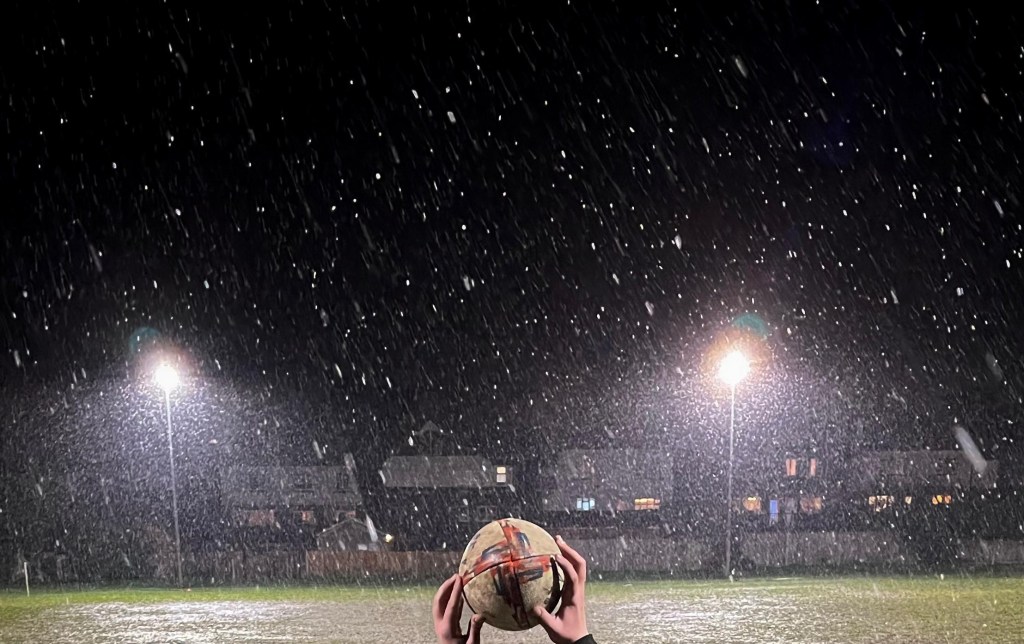
Last week, I ran a training session at my rugby club in what can only be described as near-arctic conditions. The weather wasn’t quite cold enough to freeze the ground, but there was snow in the air and a biting chill that seemed to seep straight into the bones. I had to layer up with two pairs of socks just to keep my toes from going numb. I’ll admit, I went into the session with some trepidation. The conditions were hardly inviting, and I was expecting complaints, frozen fingers fumbling passes, and a general reluctance to move.

But what unfolded completely defied my expectations. It turned out to be one of the best training sessions our girls have ever had. They were fully focused, brimming with energy, and attacking tackles and rucks with a vigour that could have melted the snow around them. It was one of those moments as a coach that leaves you both proud and reflective – wondering why, against all odds, it had gone so well.

The Challenges of Training in Freezing Conditions

I’ve trained in freezing weather before, and I know how difficult it can be. Frozen fingers struggle to catch the ball, running in the cold burns the lungs, and standing still for even a moment lets the chill creep in. It’s not just physically tough – mentally, the cold can sap focus and enthusiasm if you let it. For players, and even for coaches, it can feel like a battle against the elements.

Knowing this, I approached the session with a plan to keep everyone as active as possible. We kept the games moving quickly, with minimal downtime between activities, so no one was left standing around too long. Even us coaches joined in with parts of the warm-up – anything to keep our bodies moving and stave off the cold.

Still, I was prepared for the usual challenges that come with training in these conditions. What I hadn’t prepared for, though, was how the snow itself would transform the session.

The Magic of Snow

As the session unfolded, it became clear that the snow was having an unexpected impact. Rather than being a hindrance, it became a source of energy and excitement. Playing rugby in the snow was a novel experience for all of us, coaches included. It was something different, something fun. The snow became a distraction from the cold, shifting the players’ focus away from the discomfort of the freezing weather.

Instead of thinking about their frozen fingers or stinging lungs, the girls were fully immersed in the moment – enjoying the snow, the movement, and the camaraderie with their teammates. It was as if their minds had found a way to override the physical discomfort, and in doing so, they unlocked a level of focus and energy that surprised us all.

A Lesson in Mindset

After the session, I couldn’t help but reflect on why it had gone so well. I shared my thoughts with my coach, and we came to the same conclusion – it was all down to mindset. The snow had created a shift in perspective. It turned what could have been a miserable, cold training session into something different and exciting. When the players’ minds were no longer preoccupied with the cold, they were free to focus on the game.

As my coach pointed out, one’s state of mind can overcome even the harshest conditions. Out there in the freezing weather, the players weren’t thinking about how bitterly cold it was. Their minds were on the rugby – keeping moving, staying active, and enjoying the unique experience of playing in the snow with their friends. That was the state of mind they were in, and because of it, the weather didn’t stand a chance.

It was a powerful reminder of how much our mental state influences our experience. When we focus on what we’re doing – on the joy, the challenge, or the camaraderie – we can push through discomfort and even thrive in conditions that might otherwise hold us back.

Lessons for Rugby and Beyond

This experience highlighted something that goes far beyond rugby. Whether we’re dealing with freezing weather, a tough match, or challenges in everyday life, our mindset plays a crucial role in how we respond. By shifting our focus away from what’s uncomfortable and towards what’s engaging or meaningful, we can transform our experience.

For me, this session reinforced the importance of creating the right environment as a coach. It’s not just about running drills or teaching technique – it’s about helping players find the joy and focus that allows them to give their best, no matter the circumstances. Sometimes, that means embracing the unexpected – like snow – and finding ways to turn it into an advantage.

Staying Active in Challenging Conditions

If you’re a coach or a parent reading this, you might be wondering how to replicate this kind of success in your own sessions. Here are a few tips I’ve found helpful for keeping players engaged and energised in challenging conditions:

  1. Keep it Moving – Minimise downtime between activities to keep everyone warm and engaged. The less time spent standing still, the better.
  2. Embrace Novelty – Use unexpected conditions, like snow, as an opportunity to try something new or different. Novelty can be a powerful motivator.
  3. Focus on Fun – When players are enjoying themselves, they’re less likely to dwell on discomfort. Create an environment where fun and teamwork take centre stage.
  4. Encourage a Positive Mindset – Help players focus on what they can control and what they enjoy about the game, rather than what might be challenging or uncomfortable.

A Call to Action

If you’re looking to bring this kind of energy and mindset to your own coaching or parenting journey, I’d love to help. My book, Mud, Tries, and Tantrums: Raising Happy Rugby Players, is packed with insights and practical tips for supporting young players on and off the field. Although it’s written from a rugby perspective, the lessons and strategies are just as applicable to any sport – and to life in general. Whether you’re a coach, a parent, or both, it’s a resource to help you create an environment where players can thrive, no matter the conditions.

You can pick up a copy on Amazon in paperback or Kindle format – and if you do, please leave a review. Your feedback helps spread the word and supports other parents and coaches who want to make a difference in young players’ lives.

If you’re interested in working with me directly, feel free to reach out. Whether you’re looking to achieve your goals, overcome challenges, or build resilience in the face of adversity, I’m here to help. Together, we can develop strategies that energise, focus, and inspire you to perform at your best in all areas of life.

Getting from A to B: Overcoming the Daunting Gap

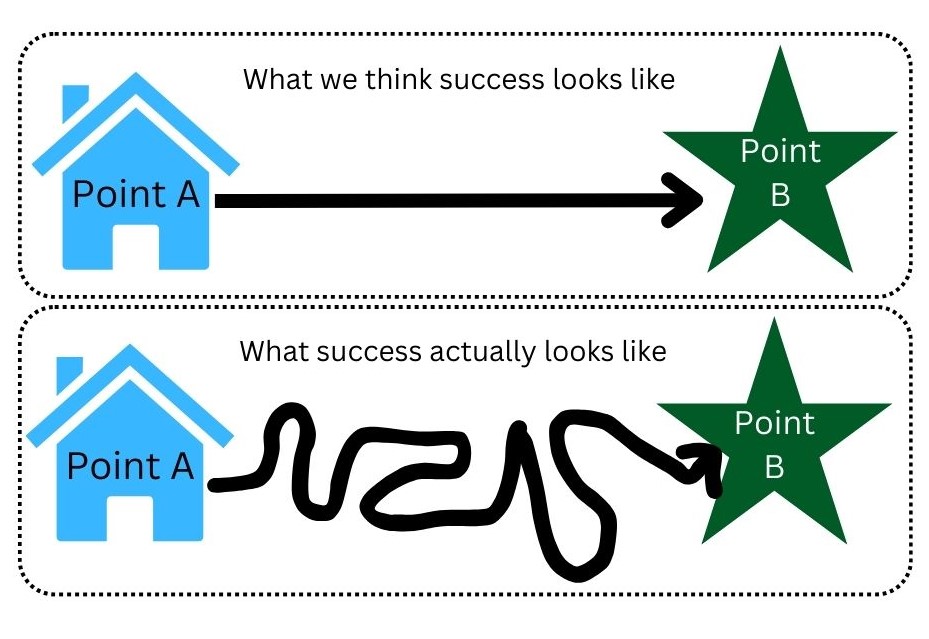
We’ve all been there. You set a big, ambitious goal that lights you up inside, but when it’s time to take action, point B feels so far away that you’re paralysed at point A. Yesterday, during a coaching call, I shared my own trepidation about some of the big goals I’ve set for myself, and the conversation uncovered a perspective that I want to share with you.

The truth is, getting from A to B is rarely, if ever, a straight line. Life doesn’t work that way. Obstacles, detours, and unexpected challenges are part of the journey. But none of that matters if you adopt a mindset of progress over perfection.

During the call, my coach reminded me of a quote often attributed to General Norman Schwarzkopf: “Plans are useless, but planning is essential.” The message? While no plan will ever unfold exactly as envisioned, the act of planning prepares you to adapt and take action. The only thing you truly need to do to move forward is to identify the best next step and take it.

Big goals often feel overwhelming because we focus too much on the vast distance between where we are and where we want to be. Instead, we need to narrow our focus to the next actionable step. When you’ve taken that step, identify the next one – and then the next. Progress happens one step at a time.

Consistency is the secret weapon here. Small, consistent actions compound over time to create significant results. Think of it this way: if you never leave point A, you’ll never reach point B. But each small step moves you closer to your goal and builds the momentum you need to keep going.

Taking stock of your progress at regular intervals is equally important. Pausing to reflect allows you to course correct, celebrate how far you’ve come, and re-align with your ultimate destination. It’s not about perfection; it’s about persistence.

This approach also works wonders when dealing with “writer’s block” or “analysis paralysis.” Both are rooted in fear – fear of getting it wrong, fear of imperfection, or fear of failure. But remember, inaction guarantees you’ll stay stuck. Moving forward, even imperfectly, is always better than standing still.

So as we step into 2025, let’s embrace the messiness of the journey. Let’s identify our big, bold goals, acknowledge the challenges ahead, and commit to action. Start by asking yourself: what is the best next step I can take today? Then take it.

Here’s to making 2025 our best year yet – for you and for me!

Mastery, Not Medals: A Shift in Perspective

Photo by Maksim Goncharenok on Pexels.com

As I mentioned in my last post, I’m currently in the process of writing a book – a collection of inspiring quotes that have profoundly influenced me. This project has been a labour of love, giving me the chance to reflect on the lessons these words carry. Each quote represents a moment of clarity, a shift in perspective, or a reminder of what truly matters in the pursuit of personal growth.

The most recent addition to this collection comes from running coach, Lawrence Van Lingen: “Mastery, not medals.” This phrase struck a chord with me because it captures a principle I’ve come to value deeply in both life and work. It reminds us that success isn’t just about reaching the finish line or collecting accolades – it’s about who we become along the way.

The Pursuit of Mastery

Mastery is about a continuous commitment to becoming better – whether as an athlete, professional, or simply as a person. Unlike medals, mastery isn’t a one-off event. It’s a lifelong journey, defined by resilience, persistence, and the quiet pride of knowing you’ve done the work. 

Chasing medals can bring moments of glory, but they’re often short-lived. The process of mastery, however, instils habits and builds a foundation that lasts far beyond the podium. It’s in the effort, the learning, and the incremental improvements that we discover our true potential.

Lessons from the Field

Whether it’s coaching young rugby players or working with clients in a professional capacity, I’ve found the same theme holds true. For young athletes, there’s often immense pressure to win, to rise through ranks, to collect trophies. But the real joy – and the lasting impact – comes from honing their skills, fostering teamwork, and building resilience.

Similarly, in my coaching journey, I started out wanting recognition. I thought success was about proving myself to others. But over time, I realised that the most meaningful achievements weren’t the moments of praise – they were the quiet, everyday efforts that led to personal and collective growth.

How to Embrace Mastery

If you’re looking to shift your focus from medals to mastery, here are a few ways to start:

  • Set Intentional Goals: Instead of targeting outcomes, aim for actions that build skills and character.
  • Celebrate Progress: Even small improvements deserve recognition – they’re the building blocks of mastery.
  • Be Patient: Mastery takes time. Embrace the gradual journey and avoid the temptation of shortcuts.
  • Reframe Challenges: View setbacks as lessons. They often teach us more than our successes do.

Moving Forward

If you find yourself chasing external validation, take a step back. Ask yourself: what would happen if you focused on the process instead? How would that shift impact your outlook, your growth, or your sense of fulfilment?

Van Lingen’s words are a powerful reminder that true success lies not in the medals we win but in the mastery we achieve along the way. When we let go of the need for constant recognition and instead embrace the pursuit of mastery, we unlock a deeper sense of accomplishment and purpose.

If you’re ready to explore what mastery looks like for you, I’d love to help. Get in touch today, and let’s start building a journey that’s meaningful, fulfilling, and uniquely yours.

Get out of that funk…

Photo by Ihsan Adityawarman on Pexels.com

We have long since left the summer behind, it was fun while it lasted. A little too much fun if I consider what has happened to my fitness! Time to get back to it, or so I thought. About 10 days ago I resolved to get back into working out, running, eating better and drinking less. Having made multiple attempts at getting back into better habits, I have learned that the older we get the more difficult it becomes, the quicker we lose our conditioning. Being somewhat impatient, when it comes to getting back to working out, I have often gone too hard, too fast, and ended up paying for it for several days… DOMS is real!

Now, I am taking a different approach, I am recognising that I am not as well-conditioned as I once was, and that being older I am going to take a little longer that my younger self may have done to get back to where I know I can be. Slower and more steady will win this race.

Well, day 1 went fine. I resolved to gradually build back up to full speed. The workout went well, I didn’t get that dreaded DOMS in the days that followed, and I was in good spirits. Then I got ill. This came with a serious lack of energy and, alongside that, a severe drop in motivation.

Whilst I am largely back firing on all cylinders, I did feel a lack of motivation and energy today on a call with my coach. During our conversation, he asked me what motivation is, and where I got my energy from? As we talked this through he noted that according to American author and speaker Steven Chandler, “motivation follows action, not the other way around.” Furthermore, Chandler advises that we focus on creating energy rather than trying to find motivation.

Another project I am working on at the moment is writing a book of quotes, and exploring their meaning and the insights that we can take from them. I have set myself a 12 month timeframe and have made a good start to this. As I produce each write up it is loaded into a working version, which is viewable online. I recently sent the link to a good friend of mine. His feedback gave me a nice warm feeling as he related how one of the quotes had already made a difference to his family as they reviewed it over dinner one night. This feedback certainly got me motivated to keep going. I had shared this feedback previously with my coach, and during our conversation today, he asked me how it had made me feel. Reflecting on those feelings I immediately noticed a shift in my energy levels, and my motivation to shake off the lethargy of the last few days started to blossom – hence me writing this blog entry after a number of months since my last one. As I am writing, I am feeling all manner of ideas bubbling up and my motivation increasing.

It looks to me right now that Steven Chandler is correct – create energy, take action and the motivation to continue comes. Thanks to my coach, I got out of the funk I was in. Working with a coach can work wonders for each of us – if you’d like to explore working with me then get in touch.