What Blowing a Whistle Taught Me About Learning
There’s a well-worn saying: you can only learn to ride a bicycle by riding a bicycle. Anne Lamott, the American author and writing teacher, used this phrase when speaking about learning and creativity — but really, it applies to just about everything worth doing. The idea is simple, but easy to forget: imagining how something will feel, or watching others do it, will only take you so far. To truly understand, you have to get on the bike. You have to wobble, pedal, crash, get up, and try again.
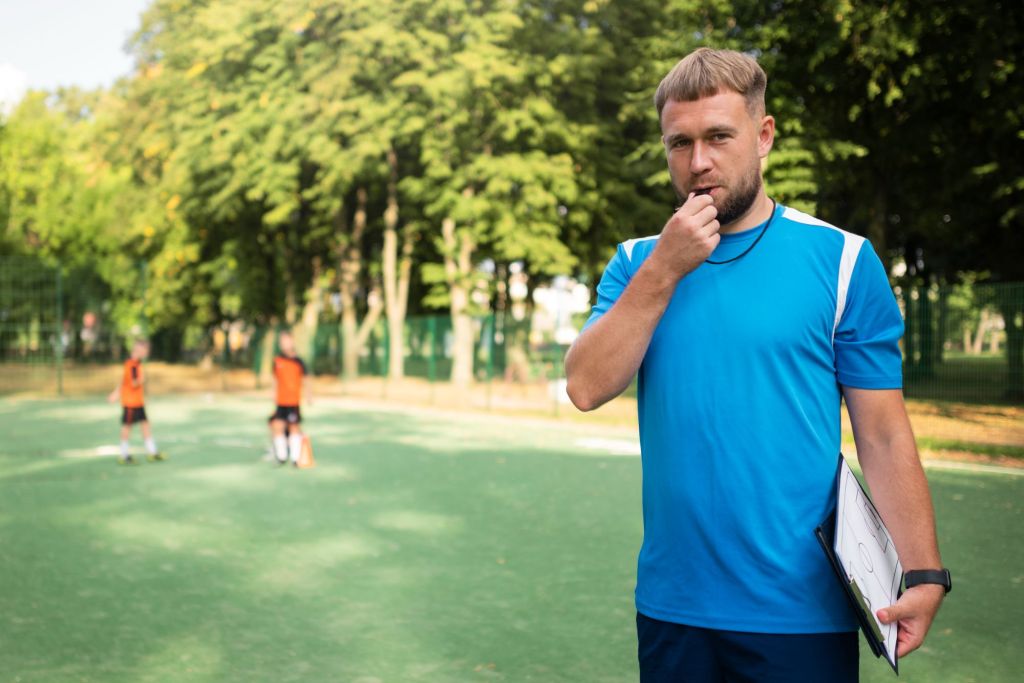
This became especially clear to me recently when my daughter enrolled on an introduction to rugby refereeing course. Like most new referees, the first thing they were handed wasn’t a law book or a PowerPoint — it was a whistle. And they weren’t just told how to use it; they were asked to demonstrate the variety of tones and volumes a referee might use during a match.
And where did all this happen? Not safely hidden indoors, but outside on the pitch, in front of one another — adding an extra layer of nerves. What followed was entertaining, to say the least. The group, a mix of young people and adults, stood awkwardly clutching their shiny new whistles. One by one, they gave it a go. Some whistles barely squeaked, others pierced the cold air unexpectedly. Some participants turned red with embarrassment, others giggled nervously, and a few found surprising confidence in their first blast. It was delightful, slightly chaotic, and utterly human.
What struck me most wasn’t just the comedy of it, but the deeper metaphor playing out before me. None of these budding referees could learn to referee simply by reading the law book or watching rugby on TV. They had to blow the whistle themselves — and, crucially, get it wrong before they got it right.
The Gap Between Imagining and Doing
So much of learning works this way. There is always a gap between imagining and doing. We think we understand what something will be like, but the reality is rarely how we picture it. Before blowing a whistle on a pitch surrounded by others, the act may seem straightforward — how hard can it be? But when you’re standing there, needing to produce the right sound with the right energy, self-consciousness and uncertainty creep in. The muscles don’t work the way you expect. The sound isn’t quite what you intended.
In life, we often hesitate at the edge of trying something new because of this very gap. We prefer the safety of theory. We read about it, plan it, and imagine ourselves doing it well. But until we step in and have a go, the learning can’t begin.
And here’s the important bit: the first tries are often messy, awkward, or even a little bit embarrassing. Just like those tentative whistles. Just like the wobbly first pedal strokes when you first learned to ride a bike.
The Courage to Be Awkward
Watching my daughter and the other participants fumble through their first whistle blows reminded me that learning is, by nature, an act of vulnerability. To begin anything new is to risk getting it wrong, sometimes publicly. Yet this is the only way forward.
How often do we hold back from learning new skills or pursuing new opportunities simply because we don’t want to be seen wobbling? We convince ourselves we need to read just one more book, take one more course, or prepare just a little bit longer. Preparation has its place, of course, but eventually, you have to blow the whistle.
Whether it’s public speaking, starting a new job, coaching for the first time, parenting, or any number of life’s challenges, the principle is the same. The theory and preparation give you a framework, but the real learning only starts when you step in, and likely, when you mess up a little.
Life is Full of First Whistles
Life is packed with ‘first whistles’ — moments when we have to find the courage to try, without knowing exactly how it will go. We all have them, whether we’re children or adults. And just like on the refereeing course, the first attempts may feel awkward, tentative, or hilarious.
But here’s the beauty of it: with each try, confidence grows. The second whistle is a little stronger. The third starts to sound like the referees we’ve all heard on a Saturday afternoon. Before long, what once felt unnatural becomes second nature.
Anne Lamott was right. You can only learn to ride a bicycle by riding a bicycle. Likewise, you can only learn to referee by refereeing — and yes, by blowing the whistle. You can only learn to live fully by living, mistakes and all.
So, whatever your whistle looks like — a new skill, a fresh challenge, or a long-held dream — I hope you’ll find the courage to give it that first, tentative blow. It might not sound perfect the first time, but that’s exactly how learning works.
 Patrick Hickman