
The other morning, over a cup of coffee and a quiet moment before the day kicked off, I caught part of a radio interview with a politician. She was being asked about her party’s position on certain targets, and she flatly refused to commit to any. Her reasoning? According to her, when in power, the opposition had set plenty of targets that they never met… they changed them constantly. Her implication was clear: if that was acceptable then, why should she bother setting any now?
This isn’t a political post, not even close. But the conversation stuck with me and it got me thinking: if targets can be so easily missed, manipulated, or dismissed, what’s the point of having them?
Turns out, quite a lot.
Targets: A Framework for Focus
The way I see it, targets aren’t about perfection, they’re about direction.
When you set a target, you’re declaring an intention. You’re choosing to move in a particular direction, with a clear point in sight. It might be ambitious, maybe even uncomfortable, but it’s there to guide your decisions and behaviours.
Think of it like heading out on a walk. If you know you’re aiming for the top of a hill, you can figure out which path to take, how much time you’ll need, and when to pause for breath. Without that destination in mind, you might wander, enjoy the scenery, but never really get anywhere.
A Personal Reflection: Running with Purpose
I’ve seen the impact of targets most clearly in my own life when I’ve had something concrete to work towards. Take running, for example.
The times I’ve set myself a goal, say preparing for a 10-mile race, everything changes. I find myself planning runs into my week, thinking more consciously about my diet, sleep, and energy levels. I start measuring progress, taking note of improvements, and feeling a growing sense of momentum.
Compare that to the times when I’ve simply said, “I want to run more.” With no specific race or target in mind, it’s all too easy to skip a session. One missed run becomes two. A busy week becomes an excuse. Before I know it, a month has passed and I’m back at square one.
It’s not that I’m lazy or unmotivated, it’s that I didn’t give myself anything to aim for.
Why We Avoid Setting Goals
There’s often hesitation around targets, and it’s not hard to see why.
Targets can feel rigid and unforgiving. We’ve all experienced the disappointment of falling short. But avoiding targets out of fear of failure is like avoiding maps in case you get lost. The goal isn’t to follow the path perfectly, it’s to have something to refer back to when you go off course.
Even when we don’t meet our goals, the very act of setting them can give us clarity, momentum, and learning. Sometimes that’s more valuable than hitting the mark precisely.
How to Set Better Targets
If setting goals feels like a chore or a trap, try reframing how you approach them. Here are a few principles that can help:
- Make them meaningful: Set goals that align with what matters to you. If a target feels imposed or irrelevant, it won’t stick.
- Break them down: Big goals can be overwhelming. Break them into manageable steps or milestones to build confidence and track progress.
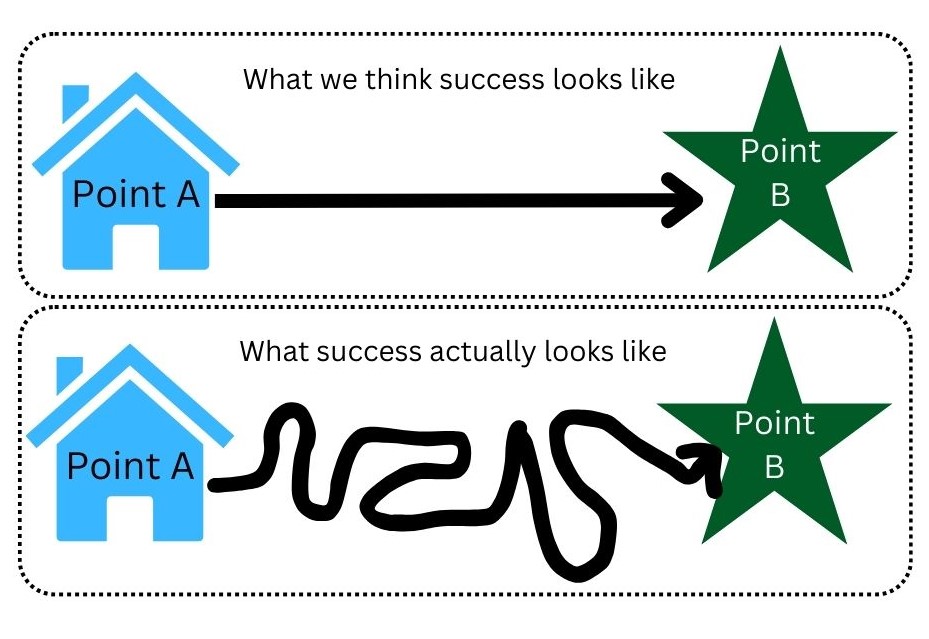
- Expect detours: Progress is rarely linear. Allow for flexibility. Life will happen, and that’s okay. The goal is direction, not perfection.
- Review and adjust: Check in regularly. Are you still aiming at the right thing? Has the context changed? Targets can evolve – that’s not a failure, it’s wise responsiveness.
Pause and Reflect
Take a moment to think about something you’ve been meaning to do. Maybe it’s health-related. Maybe it’s a personal project or a professional ambition.
- What would happen if you turned it into a clear, specific goal?
- How would that change your focus and your behaviour this week?
- What’s stopping you from setting that target now?
Final Thoughts
It’s easy to become cynical about targets, especially when they’re misused or missed. But writing off goals altogether is a mistake. A well-set target doesn’t box us in, it opens us up to progress, intention, and the satisfaction of moving with purpose.
You don’t need to shout your targets from the rooftops, but setting them quietly, intentionally, and with a sense of commitment can make a world of difference. Not just in what you achieve, but in how you show up along the way.
 Patrick Hickman