Blog

Playing the Advantage

We’ve all seen them – the “top button brigade”.

It’s that way of doing things where compliance quietly becomes the main thing. The only thing, sometimes.

In classrooms, it shows up in small but oddly loaded ways. A dress code where “smart” stops being about how someone looks overall and becomes about a single detail – a top button done up, even when the shirt doesn’t quite fit right, even when everything else looks fine.

And I find myself wondering what that actually teaches.

Because the message isn’t really about presentation. It’s about the rule itself. The “what” (looking smart) gets replaced by the “how” – follow the instruction exactly as written. No judgement. No interpretation. Just compliance.

And I don’t think that stays in the classroom.

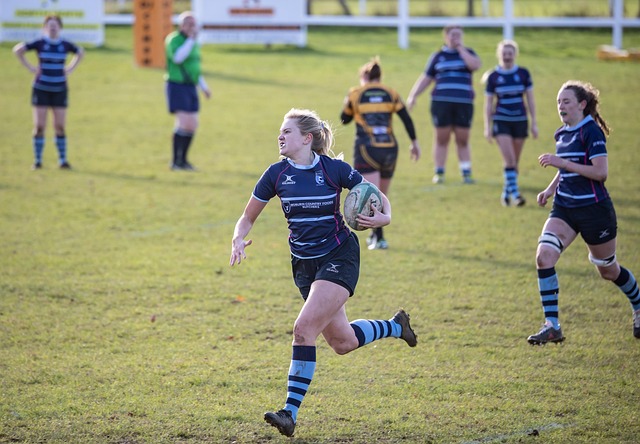
As a youth rugby coach, I see echoes of it all the time.

Players who are technically good, sometimes really good, but something shifts when things become uncertain. The moment a law is breached they freeze. They look for the referee. They stop playing.

It’s like they’ve learned, in one part of life, that mistakes are something to be avoided at all costs… and then they carry that into a sport where mistakes are actually part of how the game works.

Where the game doesn’t really exist without them.

There’s a phrase I’ve come across before: the tension between the letter of the law and the spirit of the law. And that feels quite close to what I’m noticing here, even if I don’t fully have the language for it.

It feels less like theory and more like something you can see playing out in real time.

Barry Schwartz talks about something similar when he writes about practical wisdom and the way systems can slowly replace judgement with rules when trust starts to fade.

I keep coming back to that idea. Because rules themselves aren’t the issue. It’s what happens when they become the only thing we’re allowed to rely on.

When judgement gets removed from the equation.

Schwartz calls it something like the “booby prize” of rules – this idea that when we stop trusting people to think, we replace thinking with checklists. Boxes to tick. Instructions to follow.

And it works on paper. You get consistency. You get control. You get predictability.

But something else gets lost in the process.

What you end up with, sometimes, is what I think of as a “jobsworth” mindset – people who can follow instructions exactly but struggle when the instructions don’t quite fit what’s in front of them.

And I see hints of that on the pitch too.

Not as a criticism of the players, more as something they’ve absorbed from elsewhere.

Playing the advantage

Rugby and sport in general offers a different model.

The advantage rule is one of the clearest examples of judgement in action. A law is broken, but the game doesn’t stop. The referee reads the situation and asks a different question: who benefits most if we let this continue?

It requires feel. Timing. Context. A kind of trust in what’s unfolding.

And the players who grow most in that environment are usually the ones who learn to stay in motion when things are unclear. They don’t collapse the moment something doesn’t go to plan.

They adapt.

They keep playing.

There’s something quite human in that. Something we sometimes lose when we move between systems that prefer certainty over judgement.

Reconciling two worlds

I don’t think this is about rejecting rules.

I believe in discipline. In structure. In small habits that create order. There’s something grounding about doing simple things consistently – like making your bed in the morning. Not because it’s morally significant, but because it sets a tone.

But there’s a difference between useful structure and rigid control.

Between something that supports judgement… and something that replaces it.

One feels like a foundation you can stand on.

The other starts to feel like a script you’re not allowed to step outside of.

And over time that shapes behaviour more than we probably realise.

People stop asking “what makes sense here?” and start asking “what am I allowed to do here?”

Those aren’t quite the same thing.

The “canny outlaw”

There’s another phrase I’ve come across: the “canny outlaw”.

It sits in an interesting space.

Not someone who breaks rules for the sake of it, but someone who can sense when a rule no longer serves the purpose it was designed for. Someone willing to bend, or step sideways, in service of a better outcome.

In sport, that might be a player who keeps the game alive when others have already stopped.

In life, it might be something quieter than that.

But I think there’s something in it we often miss when we focus too heavily on compliance.

Because if everything becomes about following the map exactly as it’s drawn, we lose the ability to respond when the map doesn’t match the terrain.

And it rarely does.

I keep coming back to that.

That maybe the real skill we’re trying to build isn’t perfect obedience or perfect rebellion – but something more nuanced.

Something closer to judgement.

Something closer to trust in your ability to see what’s needed in the moment, rather than what the rulebook says in theory.

And I’m not sure I’ve fully landed that thought yet.

It’s still moving around a bit.

Which is probably why it stays interesting.


Where have you noticed, in sport or in life, that someone following the “rule” actually made it harder to do what was clearly the right thing in that moment?

Back to Centre

It’s been a couple of weeks since my last post, and in that time life seems to have filled every available gap.

  • Worthing 10s Girls Rugby Festival.
  • End of season awards, BBQ and water fight.
  • Plenty going on at work.

It’s been one of those stretches where you don’t really stop – you just move from one thing to the next. And somewhere in that I noticed I hadn’t written anything.

For a moment, I wondered… is that writer’s block?

But the more I sat with it the more it felt like something else entirely. Not a lack of ideas, but almost too much life to process in real time. No space yet to step back and make sense of it.

Because writing, at least for me, seems to come after the living. Not during.


Something else I’ve noticed in the last couple of weeks is a shift in how I’m moving through life.

I’d say on the whole I’m more level-headed more often. That doesn’t mean I don’t still have moments where emotions rise up, because I certainly do. What’s different, though, is how quickly things settle again.

The swing back to centre feels quicker. Softer. Less dramatic.

And that’s new.


I was listening to a recording from a coaching session by Jamie Smart the other day. He was sharing a story about the origins of the 12-step process.

I don’t remember the details exactly but the essence stuck with me.

The founder had spent weeks and months telling anyone who would listen that he had seen the light. He was trying to help others stop drinking but nothing seemed to land. Eventually, he became disheartened and said to his wife that no matter what he did, he couldn’t get these people to change.

Her response was simple – but it cut through everything.

“At least it’s helping you stay sober.”

That landed.

Because it points to something easy to overlook – that the things we share, teach or explore with others are often doing just as much work on us.

Sometimes more.


I saw that play out in a very real way recently.

We were away camping and someone accidentally damaged a piece of our equipment. In the past that would have been enough to tip me over. Frustration, annoyance, maybe a bit of blame – all of it would have shown up quickly.

But something was different this time… I stayed calm.

Not through effort or restraint. It just didn’t escalate.

There was a quiet knowing in the background – that reacting wouldn’t fix the damage, wouldn’t help the situation and would probably make the other person feel worse than they already did.

So I carried on.

And we moved on.

No fuss, no fallout and everyone’s dignity intact.


When I shared this in a coaching call earlier this week, my coach reflected something back to me that I hadn’t fully seen.

All the conversations.
All the reflections.
All the time spent exploring how our experience is created.

It’s doing something… even when I’m not consciously thinking about it.


Maybe that’s the real takeaway from these past couple of weeks.

Not whether I’ve had time to write.

But what’s been quietly changing underneath it all.

Because if the work we’re doing – the thinking, the learning, the conversations – is showing up in moments like that…

Then something meaningful is happening.

Whether we’re writing about it yet or not.

The Distance Between You and the Outcome

I was listening to an interview between Jamie Smart and Steve Chandler the other day. Steve was talking about outcome goals and process goals and it got me thinking about how often we lean heavily on the outcome.

It’s a familiar pattern. We sit down, often at the end of the year or when something in life nudges us, and we think about what we want to be, do or have at some point in the future.

On the surface that seems sensible. It gives us direction. Something to aim at.

But what I’ve noticed, both in myself and in the people I work with, is how easily that focus on the outcome can start to work against us.

Because the outcome lives at a distance.

When we measure ourselves against something far away progress can feel invisible. You don’t suddenly feel fitter after a few workouts. You don’t instantly see a full pipeline after a handful of calls. From where you’re standing it can look like nothing is happening.

That’s often where motivation dips. It’s where doubt creeps in, and it’s where people quietly move on from the goal altogether, or decide that goal-setting just isn’t for them.

The distinction Steve was pointing to – the part that’s been useful for me – is the shift towards process goals.

Outcome goals still matter – they set the direction. But process goals are where movement actually happens. They bring things back to something concrete. Something you can do, repeat and measure in the short term.

Instead of “get fit”, it becomes showing up for a certain number of sessions each week.
Instead of “grow the business”, it becomes making a set number of calls or having a set number of conversations.
Instead of “become a better player”, it becomes the number of passes, kicks, or drills you put in.

I see this a lot with the girls’ rugby team. The biggest improvements don’t come from talking about winning matches or league position. They come from the repetition of simple actions: turning up, practising, making the next pass, getting back into position. Over time those small things compound and often we reach out goal quicker than we’d expected, or we learn more that we hoped.

There’s also something important that shifts psychologically.

When the focus is purely on the outcome, the comparison is always between where you are now and where you think you should be. And that gap can feel discouraging.

Process goals change the reference point.

Instead of asking, “Am I there yet?”, the question becomes, “Did I do what I said I would do today or this week?”

It’s a quieter measure, but a more reliable one.

Over time, it gives you something tangible to build on. You can adjust it, increase it, refine it. If progress isn’t showing up in the way you expected, you’ve got something to look at. You can ask whether the volume is right, whether the approach needs tweaking, or whether the process itself needs to change.

None of that is really possible when everything is tied up in a distant outcome.

I’m still working this through myself, but it does seem that when goals start to feel heavy or frustrating, it’s often a sign that the balance is off.

The outcome is still doing its job… it’s pointing somewhere.

But the real work, and most of the momentum, sits much closer in.

In the reps.
In the small, repeatable actions.
In the next thing that can actually be done.

Just out of sight

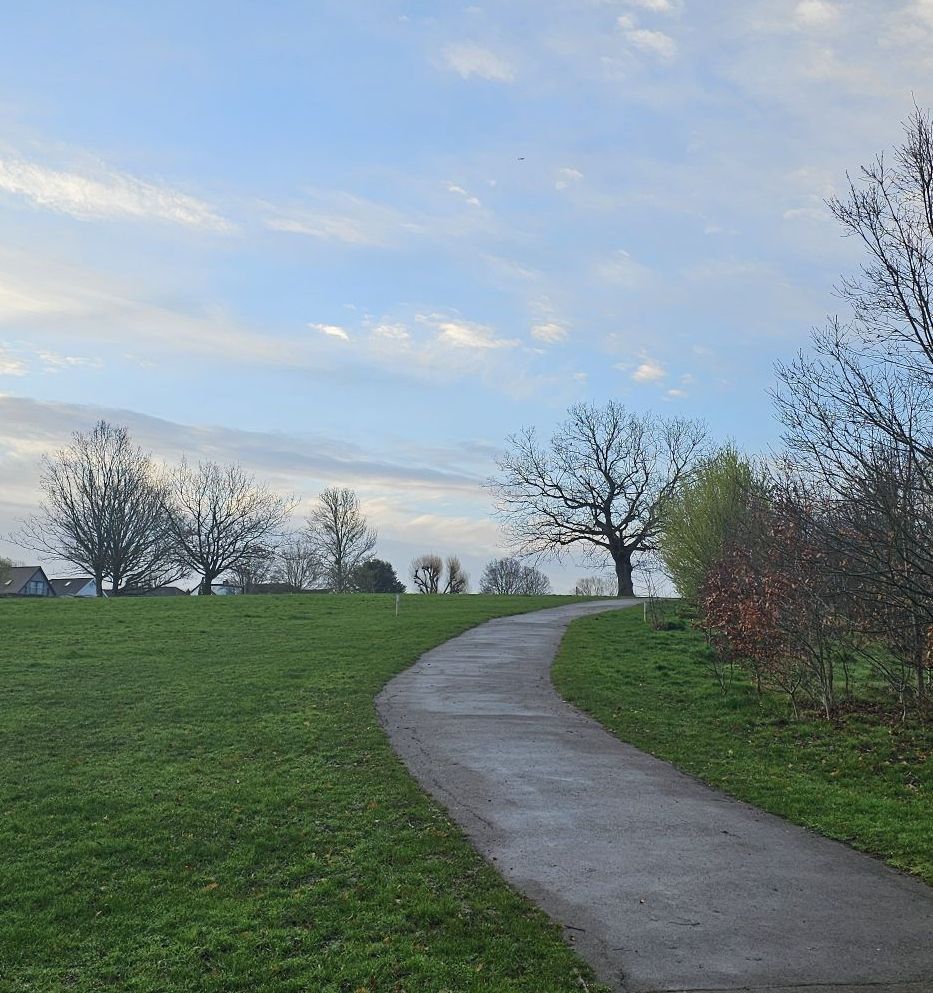
Out for a walk the other morning on a path I know well, I found myself stopping as an image came to mind.

At the halfway point, I turned around and looked back up the hill I’d just come down. The path curved gently away around a bend, disappearing from view. I took my phone out and captured it, though I’m not sure the photo quite held what I’d seen.

There was something in that moment.

We spend so much of our time looking ahead, trying to see the path in front of us. It’s rarely straight. There are bends, rises, dips, bits you can’t quite make out. And yet, somehow, we’re always standing here, wherever “here” happens to be, having already travelled a version of that same kind of path.

All those turns. All those stretches where we couldn’t quite see what was coming. And still, we arrived.

I stood there for a bit longer than usual, looking up the hill. Wondering, I suppose, where that path actually leads. Not the literal one – I know where that goes – but the bit just out of sight. Around the bend. Over the rise.

The truth is, I didn’t really know what was up there. I just knew that if I kept walking, I’d find out when I got there.

I might be wrong, but it feels like life has a similar rhythm to it. We keep moving even with the uncertainty. Even with the moments where we pause or hesitate. And yet, if I look back properly, there’s a long list of things I’ve already found a way through.

It’s easy to forget that. Easy to get caught standing still, looking ahead and wondering if we’ve got what it takes for whatever’s coming next.

I’ve been dipping into a book recently by a friend, Stan Horwitz. He writes about the pace of change in the world, particularly with AI, and doesn’t really soften it. There’s a lot in there that could feel unsettling if you sit with it for too long. But there’s also something else running through it… a sense that there is still a place for us in all of this.

Not by standing back, but by stepping into it. Figuring it out as we go.

That idea seemed to echo what I’d felt on the path this morning.

We don’t get to see the whole route laid out in advance. We never really have. And yet we keep going. Step by step. Sometimes confidently, sometimes not so much.

Maybe it’s less about knowing what’s around the bend, and more about remembering that we’ve walked enough paths already to trust ourselves with whatever we find when we get there.

I stood for a moment longer, then turned and carried on up the hill.

How’s Your Building Going?

As we reach the end of the first quarter, I’ve found myself taking stock.

Not in a dramatic, tear-it-all-up-and-start-again kind of way… just a quiet check-in.

And if I’m honest, I noticed something creeping in.

I’d been letting a bit too much of the outside world into my inside world.

The constant stream of news. The background noise of conflict and rising costs… and then more personal things like a property sale falling through right near the end, sending us back to square one.

None of it unusual. All part of life.

But together, it started to create a wobble.

A subtle shift.

I caught myself looking ahead and wondering how things were all going to play out.

And without really noticing at first, that question pulled me into a feeling of scarcity. Tightness. Uncertainty.

Which is interesting… because if I step back, I know that’s not the reality I’m living in.

So yesterday evening, I paused.

Not to fix anything. Just to look.

I went back to the foundations and asked myself a simple question:

Where am I, really?

And the answers were all there.

A loving wife and three brilliant girls.
A warm, dry home.
Food on the table.
Work that supports us.

When I looked properly, nothing had changed… except where my attention had been.

That was the moment it clicked again.
Awareness of the world matters — of course it does.

But when we let it dominate our thinking, it starts to build a life for us… rather than us building the life we actually want.

And that’s the bit that matters.

Because whether we realise it or not, we’re always building.

The question is – are we doing it with intention, or by default?

What this week reminded me is something I already “know”, but clearly needed to feel again:
I get pulled off track. I drift. I get caught up in things that aren’t mine to carry. But I can also come back.

And when I do – when I shift my focus back to what’s real, what’s here, what I’m creating – the fog lifts.
Not forever. But enough.
Enough to keep building.

So as we reach the end of March, it’s a good moment to pause and ask:
How’s your building going?
Is it taking shape in the way you’d hoped?
Or has it drifted a little?

If it’s the latter, you’re not alone.

And the good news is – it doesn’t take a complete overhaul.

Sometimes it just starts with a conversation.
That’s exactly why I created Built With Intention.

Not as a fix, or a formula… but as a space to step back, take stock and consciously shape the life you’re building.

If that feels like something that would help, feel free to reach out for a chat.