Mastery, Not Medals: A Shift in Perspective

Photo by Maksim Goncharenok on Pexels.com

As I mentioned in my last post, I’m currently in the process of writing a book – a collection of inspiring quotes that have profoundly influenced me. This project has been a labour of love, giving me the chance to reflect on the lessons these words carry. Each quote represents a moment of clarity, a shift in perspective, or a reminder of what truly matters in the pursuit of personal growth.

The most recent addition to this collection comes from running coach, Lawrence Van Lingen: “Mastery, not medals.” This phrase struck a chord with me because it captures a principle I’ve come to value deeply in both life and work. It reminds us that success isn’t just about reaching the finish line or collecting accolades – it’s about who we become along the way.

The Pursuit of Mastery

Mastery is about a continuous commitment to becoming better – whether as an athlete, professional, or simply as a person. Unlike medals, mastery isn’t a one-off event. It’s a lifelong journey, defined by resilience, persistence, and the quiet pride of knowing you’ve done the work. 

Chasing medals can bring moments of glory, but they’re often short-lived. The process of mastery, however, instils habits and builds a foundation that lasts far beyond the podium. It’s in the effort, the learning, and the incremental improvements that we discover our true potential.

Lessons from the Field

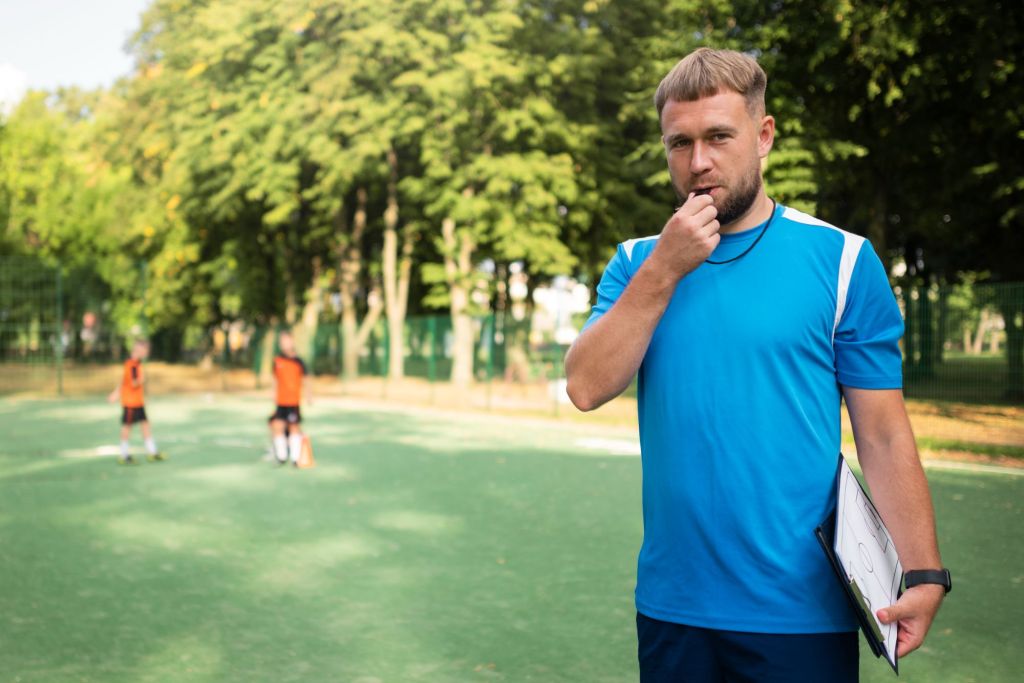
Whether it’s coaching young rugby players or working with clients in a professional capacity, I’ve found the same theme holds true. For young athletes, there’s often immense pressure to win, to rise through ranks, to collect trophies. But the real joy – and the lasting impact – comes from honing their skills, fostering teamwork, and building resilience.

Similarly, in my coaching journey, I started out wanting recognition. I thought success was about proving myself to others. But over time, I realised that the most meaningful achievements weren’t the moments of praise – they were the quiet, everyday efforts that led to personal and collective growth.

How to Embrace Mastery

If you’re looking to shift your focus from medals to mastery, here are a few ways to start:

  • Set Intentional Goals: Instead of targeting outcomes, aim for actions that build skills and character.
  • Celebrate Progress: Even small improvements deserve recognition – they’re the building blocks of mastery.
  • Be Patient: Mastery takes time. Embrace the gradual journey and avoid the temptation of shortcuts.
  • Reframe Challenges: View setbacks as lessons. They often teach us more than our successes do.

Moving Forward

If you find yourself chasing external validation, take a step back. Ask yourself: what would happen if you focused on the process instead? How would that shift impact your outlook, your growth, or your sense of fulfilment?

Van Lingen’s words are a powerful reminder that true success lies not in the medals we win but in the mastery we achieve along the way. When we let go of the need for constant recognition and instead embrace the pursuit of mastery, we unlock a deeper sense of accomplishment and purpose.

If you’re ready to explore what mastery looks like for you, I’d love to help. Get in touch today, and let’s start building a journey that’s meaningful, fulfilling, and uniquely yours.

Get out of that funk…

Photo by Ihsan Adityawarman on Pexels.com

We have long since left the summer behind, it was fun while it lasted. A little too much fun if I consider what has happened to my fitness! Time to get back to it, or so I thought. About 10 days ago I resolved to get back into working out, running, eating better and drinking less. Having made multiple attempts at getting back into better habits, I have learned that the older we get the more difficult it becomes, the quicker we lose our conditioning. Being somewhat impatient, when it comes to getting back to working out, I have often gone too hard, too fast, and ended up paying for it for several days… DOMS is real!

Now, I am taking a different approach, I am recognising that I am not as well-conditioned as I once was, and that being older I am going to take a little longer that my younger self may have done to get back to where I know I can be. Slower and more steady will win this race.

Well, day 1 went fine. I resolved to gradually build back up to full speed. The workout went well, I didn’t get that dreaded DOMS in the days that followed, and I was in good spirits. Then I got ill. This came with a serious lack of energy and, alongside that, a severe drop in motivation.

Whilst I am largely back firing on all cylinders, I did feel a lack of motivation and energy today on a call with my coach. During our conversation, he asked me what motivation is, and where I got my energy from? As we talked this through he noted that according to American author and speaker Steven Chandler, “motivation follows action, not the other way around.” Furthermore, Chandler advises that we focus on creating energy rather than trying to find motivation.

Another project I am working on at the moment is writing a book of quotes, and exploring their meaning and the insights that we can take from them. I have set myself a 12 month timeframe and have made a good start to this. As I produce each write up it is loaded into a working version, which is viewable online. I recently sent the link to a good friend of mine. His feedback gave me a nice warm feeling as he related how one of the quotes had already made a difference to his family as they reviewed it over dinner one night. This feedback certainly got me motivated to keep going. I had shared this feedback previously with my coach, and during our conversation today, he asked me how it had made me feel. Reflecting on those feelings I immediately noticed a shift in my energy levels, and my motivation to shake off the lethargy of the last few days started to blossom – hence me writing this blog entry after a number of months since my last one. As I am writing, I am feeling all manner of ideas bubbling up and my motivation increasing.

It looks to me right now that Steven Chandler is correct – create energy, take action and the motivation to continue comes. Thanks to my coach, I got out of the funk I was in. Working with a coach can work wonders for each of us – if you’d like to explore working with me then get in touch.

Life’s lessons

It is often said that we learn more from adversity than we do when everything is going to plan. I was reflecting on this recently and I remembered something that happened to me a few years ago.

After completing a half marathon run, I developed serious, debilitating back pain which meant I had to stop running for a while. Indeed, most physical activity became impossible during that period. Previously I would have just reached for some pain killers to numb the pain and carry on, but on this occasion the pain killers provided very little relief … indeed I was still in such pain that I wondered what it would feel like without them!

This was something that was very hard to deal with as I have always been active. I played hockey at school, later turning my hand to bicycles (both road and BMX). I love playing squash and tennis (although it’s been a while since I last played) and more recently it’s running, HIIT training and, in the summer months, touch rugby have become my means of keeping fit.

Fortunately a friend recommended a local chiropractor, with whom I agreed during our initial consultation that I wanted to get back to an active lifestyle, without drugs and without surgery if possible. With that aim I commenced a 3 month treatment programme that ultimately got me back out there, running and being active again.

During this treatment we discovered a number of factors that were contributing to my back pain, and while the length of time it took to get me back to pain-free activity was frustrating, what I quickly learned was that these contributing factors had been there for years, in the background seemingly harmlessly, but always just quietly accumulating until this tipping point was reached. Something that had taken years to build up was not going to be fixed overnight, and certainly not just with pain killers!

Through this process I learned a lot about myself, my body and how to better look after myself beyond just being active. I learned to look more closely at what may be causing the pain and identify ways to address these causes rather than resorting to a quick-fix syptom based approach. I firmly believe that I am in a better place now having been through those challenges.

It’s often said that even in the most challenging of situations that we find ourselves in, there’s a lesson in there somewhere. Whilst it is often not clear at the time, when we look back, we can often see that what we have been through has taught us something.

My message to you is, when adversity strikes try to find the space and time to look for the lesson, or at the very least keep pushing on and eventually when you come out the other side you will see the lesson.

Have a plan… but be flexible

Photo by Startup Stock Photos on Pexels.com

I am a firm believer that planning is essential in many walks of life, although there certainly are times when spontaneity can lead to a heightened sense of enjoyment, such as taking a stroll through a new town when on holiday, or stoppig for a meal at a restaurant you’ve never been to. Having a plan helps things run more smoothly… and then again there are times when we can do all the planning we like only for life to throw us a challenge, requiring us to flex these plans in order to achieve success.

I was recently involved in running of the summer fair at my daughter’s school. It was a long and gruelling day, which involved arriving early, setting up, running the bar / cafe stall, and then putting everything away again at the end of the day. The days leading up to this event and the day itself threw up a number of opportunities for all of this to be brought into focus…

With a keen eye on the weather forecast for the day, it became clear to the organisers that the weather on the day had to potential to disrupt the smooth running of the event, which is usually held outdoors. What were the options? Carry on as planned, but risk significantly lower attendance; re-jig plans and put as much as possible of the event indoors; or cancel altogether. Option 2 was chosen and with this decision, all the previous plans were set aside, and off kicked a whole lot of re-planning to hopefully ensure a smooth-running event. How did the it go? Well, it’s fair to say given the changes it went very well, in fact better than expected. It was a lot of work but it was the right choice and resulted in a successful outcome… have a plan, but be flexible.

Then, several times during the event I was struck by the importance of having a plan to make things run more smoothly – whether that is in the setting up, the running of the day, or the clean up afterwards. I am sure we can all recal times when something has not gone as smoothly as we’d hoped and it turns out that if someone had just thought things through a bit more then everyone would’ve had so much better of an experience.

Needless to say, having a plan doesn’t guarantee success, but it can certainly make life a lot easier – whether it is layout of the bar stock, or co-ordinating a team of volunteers to erect or take down a gazebo, having a plan helps everything run more smoothly. I have often watched on as others have attempted to erect a gazebo, it can be a painful experience, but not as much as watching someone trying to take it down… At this most recent event we managed to both put up and take down several gazebos in terrible weather without any hitches. This was down to someone knowing what to do, and leading the others with clear and simple instructions, someone who’s clearly done this many times before!

I am putting together a new coaching programme to launch later this summer. Developing this will take some planning, and I am sure a great deal of flexibility. Keep a look out for it! In the meantime, if you’d like to arrange a conversation about coaching, please reach out. Happy planning!

Where is the limit?

Photo by Ron Lach on Pexels.com

I was talking with my coach the other day and we got to discussing perceptions of what is possible. It’s long been a passion of mine to discover what makes people succeed. “What is success?” I hear you ask… well, that’s a topic for another discussion. For now let’s leave it as success is whatever it is for the individual concerned.

How successful we are is often governed by how far we are prepared to go to achieve it. I am not saying here that absolutely anything goes, let’s keep it legal, moral and good for our fellow human beings. What I am saying though, is that how far we push ourselves will often determine how successful we are in our chosen endeavour. What is the limit to how far we can push ourselves? How do we find out where the limit is? What happens if we go beyond the limit?

I have long been a motosports fan. Nowadays motorsport is safer than it’s ever been (there is still danger, but it is masively reduced from days gone by) and so going beyond the limit tends not to have life alterning consequences, indeed usually the most that happens is that the driver is out of the race. Those that win (i.e. are successful by motor racing standards) are those that push until they find the limit, the limit of grip of the car’s tyres, the braking point beyond which the car will not slow enough to make the turn, and then stay at that limit (or very close to it) for as long as they can.

When we look at our every day targets, goals, and aspirations can we say that we push to find our own limits? How often do we reach our limits? For many of us, we find ourselves hesitating in the face of what we perceive to be our limits. Are these really our limits? How do we know? What will happen if we strive towards these limits?

Whenever, I am faced with a challenge I try to dig deeper to understand more about why I am perceiving it as a challenge. When I do this more often than not I discover that the challenge is not real, the limit is not real, it is something that I am making up. Once I do this I find that taking the necessary next steps becomes so much easier.

Don’t get me wrong, I don’t always catch myself putting up barriers to success but I am getting better at idenfying when I do, challenging the thinking that is behind this feeling, watching the perceived limit disappear and freeing up my thinking to move forward.

If you’d like to explore how working with me can help you to move past any barriers or limits you may be facing then get in touch for a chat.