What Are We Really Coaching For?
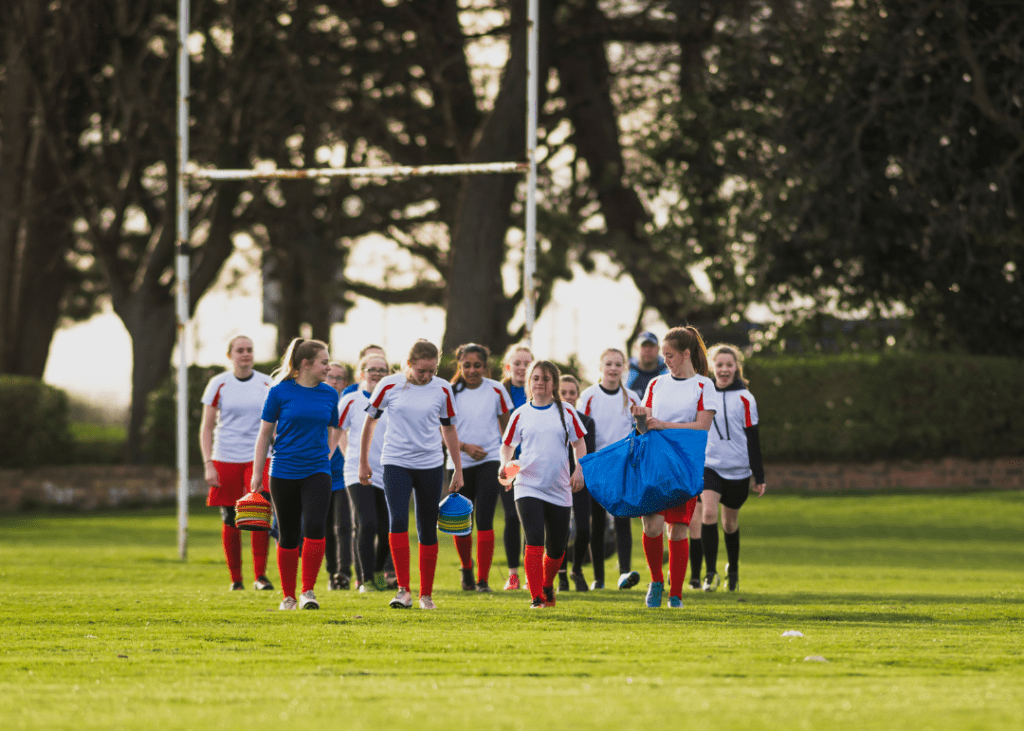
Yesterday morning I was standing on the touchline at a rugby festival, watching my youngest play.
Cold hands wrapped around a coffee, sideline chatter drifting in and out and a blur of jerseys moving across the pitch.
Youth rugby festivals have a particular feel about them. Lots of energy. Lots of noise. Proud parents. Nervous players. The occasional gasp from the crowd when someone breaks through a tackle and suddenly finds space.
And, as often happens, there were a couple of players who seemed able to do that more often than the rest.
You know the type.
A quick step.
A burst of pace.
Suddenly they’re away down the touchline and everyone on the sidelines starts to lean forward.
A try follows. Applause. Smiles. Teammates patting backs.
It’s great to watch. I imagine it feels even better to be the one scoring.
Naturally those moments attract praise. Quite a lot of it.
And standing there yesterday, watching it all unfold, a question quietly drifted into my mind:
What are we really coaching for?
Winning games is enjoyable. The players feel it. The coaches feel it.
Yet in any match where the outcome is reduced to a number on the scoreboard, there can only ever be one winner.
A lot of the game quietly slips past unnoticed if that’s the only metric we use.
Team sports are funny like that.
The scoreboard only records a handful of actions, yet so much of the game happens before those moments ever arrive. The tackle that stops the break. The pass that creates the overlap. The player who runs a line that pulls a defender just far enough out of position.
Those things rarely receive the same applause.
And I started wondering what all of this teaches young players as they grow up in the game.
If a player makes a great run, hears the cheers, and feels the buzz that comes with it… of course they’ll want that feeling again. Who wouldn’t?
It becomes a kind of feedback loop.
Do the thing that gets the applause. Seek it again.
There’s nothing wrong with that. It’s human.
But like most team sports rugby eventually asks different questions of you.
At younger age groups you might be able to run through gaps or around defenders with pure pace. It’s brilliant to watch and brilliant for the player discovering what they can do.
But the game changes as players move up the age groups.
The space tightens. The defence organises itself. The collisions become heavier. The decisions have to be made more quickly.
At some point every player comes up against someone who can match them.
And when that happens what do they draw on?
That thought kept circling in my mind as I watched the games unfold.
Maybe part of coaching young athletes is simply helping them discover the next layer of the game. Not by taking away what they’re good at, but by gently stretching it.
Yesterday I caught myself thinking about something small we might try.
Imagine a player who can run through everyone. What if, in training, they have to involve two or three teammates before they’re allowed to score?
Not to stop them scoring. That feeling matters too.
But to introduce a slightly different puzzle.
Who else is around you?
Where might the space appear if you involve a teammate?
What changes if the ball moves first?
It’s a small constraint. But constraints have a way of opening new doors.
And perhaps that’s a quiet part of the job.
Not standing behind players telling them exactly what to do (that rarely works once the whistle blows anyway) but shaping the environment so they discover things for themselves.
The more I thought about it, the more I realised how often these little ideas arrive sideways.
Not always during training sessions or team talks. Sometimes while watching another match entirely. Sometimes while standing quietly on a touchline with nothing to do but observe.
There’s something about stepping back that seems to loosen the mind a little.
When you’re not actively trying to solve the problem, the answer sometimes wanders over and taps you on the shoulder.
I like those moments.
They remind me that coaching – whether it’s a rugby team or a person trying to figure out their next step in life – probably isn’t about having all the answers.
It might simply be about staying curious.
Watching closely.
Trying something.
And seeing what unfolds next.
I’m looking forward to seeing how this little insight plays out.
 Patrick Hickman