A few years ago, I sat in our local church with my daughters during an all-age service. The pastor told a story that I was reminded of again recently. It wasn’t dramatic or ground-breaking, but it stuck with me, partly because it captured something I’d often seen but never quite found words for.
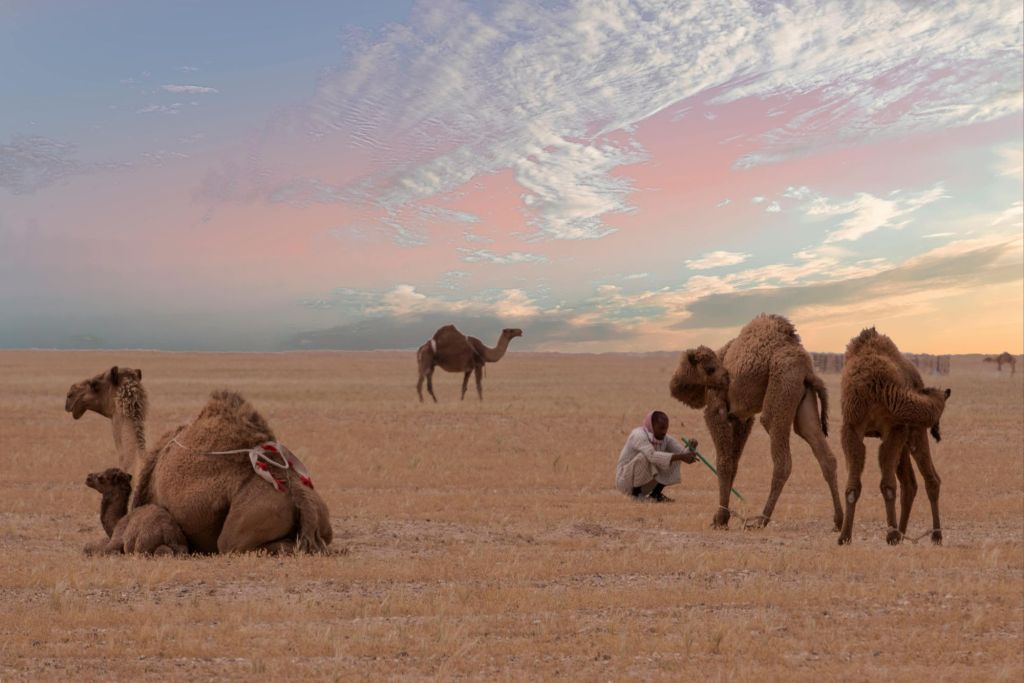
It was a story about three brothers, their late father’s will, and 17 camels. The father, a wealthy man, had left clear instructions in his will:
- The eldest son would receive half the camels
- The middle son would receive one-third
- The youngest was to receive one-ninth
The sons were content… until they tried to divide up the camels – half of 17 is 8.5, a third is just under 6, and a ninth is a little under 2. No one wanted to cut a camel in half, and no one was willing to accept less than their fair share. They reached a deadlock with each brother protecting his own interests and growing increasingly frustrated.
Then a wise man arrived. Seeing their predicament, he offered his one and only camel to add to the herd. With 18 camels now in total, the maths worked:
- The eldest got 9
- The middle son 6
- The youngest 2
That’s 17 camels. The wise man took back his own camel and walked away with everyone happy!
There’s something beautifully simple about this tale, yet the message is profound. In everyday life, particularly when money, time or pride are involved, it’s easy to get stuck in a “what’s in it for me” mindset. We defend our ground, cling to fractions of things we don’t want to let go of and lose sight of solutions that lie just beyond the obvious.
The story reminds us that problems often feel unsolvable, not because they truly are but because we’re looking at them through a narrow lens. We assume that compromise means loss and that helping others get what they need means giving up on what we need. But what if the opposite is true?
Sometimes the solution is simply to step back, bring in a new perspective or add something to the mix, even temporarily, to create clarity. The wise man in the story wasn’t personally caught up in the dispute, so he could see the bigger picture. That distance gave him insight the brothers didn’t have.
This happens in teams, families and organisations all the time. We get stuck in binary thinking: either I win or you do, but not both of us. What if, like the wise man, we introduce something new, not to give something up permanently, but to unlock a better outcome? That might mean adding a resource, offering a fresh idea or simply being willing to shift the focus from what’s fair on paper to what actually works in practice.
Of course, stepping back is hard when emotions run high or when stakes feel personal, but that’s often when it matters most.
So here’s the takeaway: when faced with a tricky situation, ask yourself, “what’s the extra camel?” What small addition or shift in mindset might break the deadlock? Can you see beyond the fractions and find a whole?
You might just solve the problem without sacrificing a thing.
 Patrick Hickman