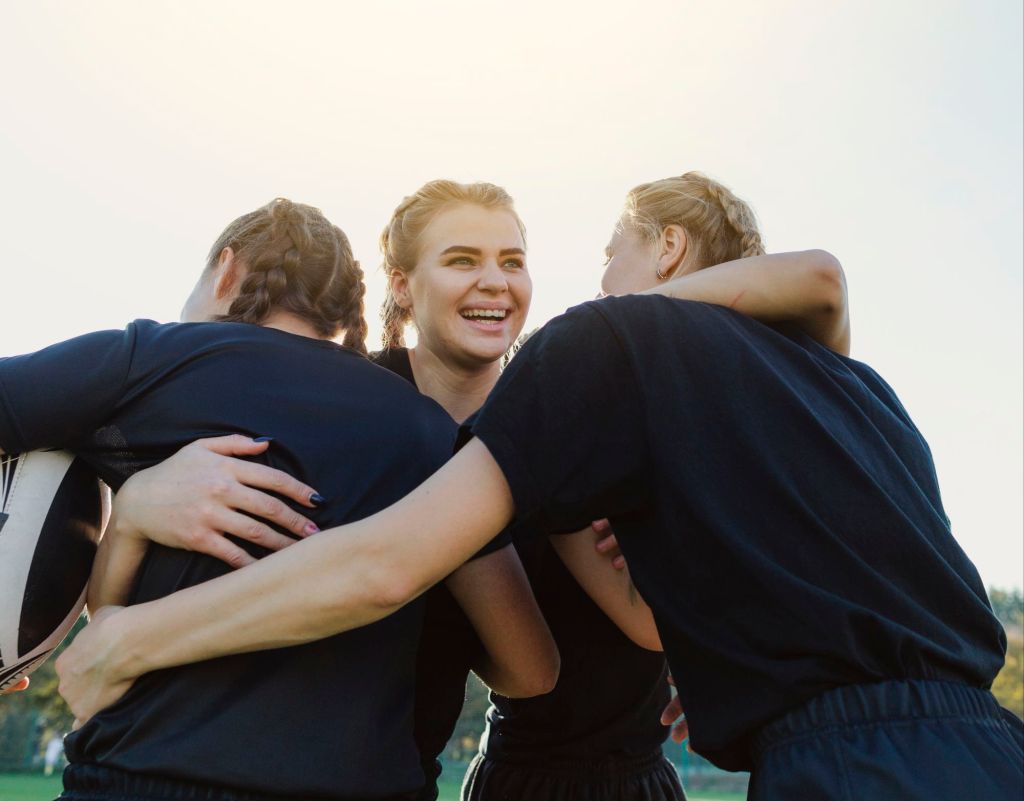
One of the standout features of this season was the steady stream of new players who came along to give rugby a go. Whether they were following a friend, inspired by the 6 Nations, or just curious about the sport, it was brilliant to see more girls joining the game. Each arrival brought fresh energy – along with the challenge of quickly getting them up to speed and helping them feel part of the squad.
Bringing new players in mid-season is rarely straightforward. Some turn up unsure if they’ll enjoy it, others full of nerves, and occasionally you get one who’s immediately raring to go. Regardless of where they start, our aim is always the same – to welcome them in, help them build confidence, and find their place in the team.
It means going back to basics again and again. Revisiting things like tackling technique, the laws of the game, and how to set up at a ruck – often while more experienced players are hungry to move on to more complex aspects of the game. Balancing the needs of both groups can be tricky, but one of the approaches that worked really well this year was involving our experienced players in coaching the newer girls. It gave the newer players someone they could learn from and lean on, and it gave our experienced girls a chance to reflect on their own learning and step into leadership. Watching a player patiently explain a technique or encourage a newcomer through her first contact session was one of the most rewarding aspects of coaching this season.
It wasn’t just about the technical side either – the social element mattered just as much. New friendships were forged quickly through small things: shared laughter during warm-ups, post-training chats, or support after a dropped ball. The atmosphere created by the squad was welcoming and open, and that didn’t happen by accident. As coaches, we talked regularly about what it means to be a team and encouraged the girls to embody those values, especially when someone new turned up.
There’s still a long way to go in growing the girls’ game, but this season was another step forward. Seeing new players return week after week – and become part of the group – is a great sign that what we’re building is something worth being part of. The more inclusive and encouraging we are, the more likely we are to keep growing the game for everyone.
Question for reflection: How do you balance developing your experienced players while creating space for new ones to grow?
 Patrick Hickman