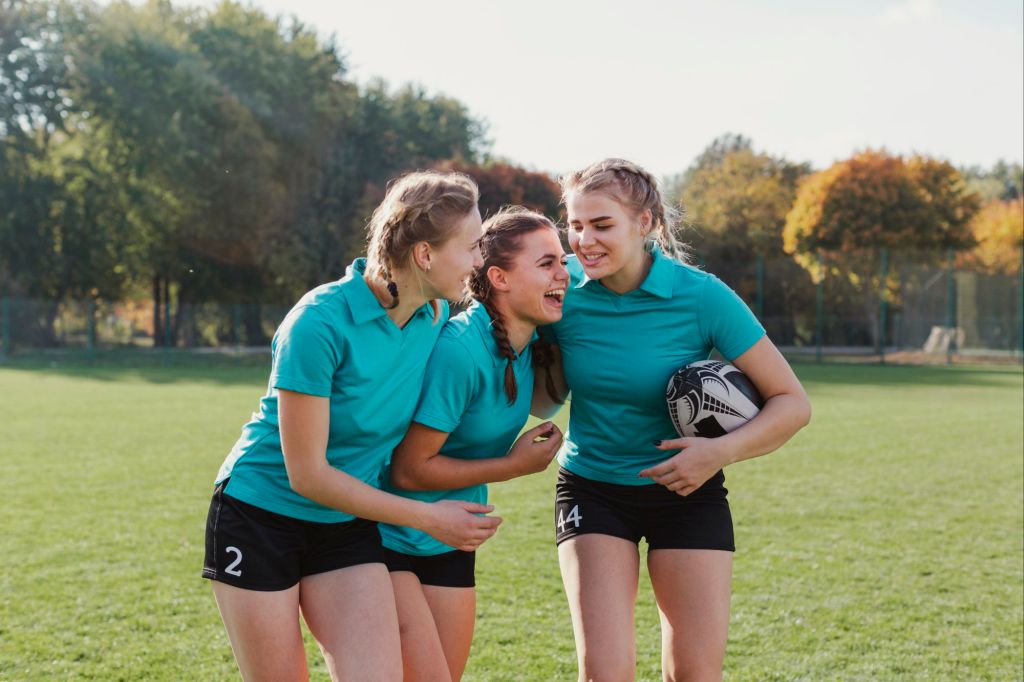
The season has officially drawn to a close. All that’s left are the end-of-season celebrations – the kit returns, thank-yous, and a few well-earned beers. It’s always a strange feeling, this pause after the final whistle of the last match. A moment to breathe, to look back, and to quietly ask the question: was it a successful season?
It’s not a straightforward question to answer. As a coach, I find myself looking at it from two angles – how the players experienced it, and how I did. And while I often say, “there’s no failure, just feedback,” the truth is that I wrestle with that idea myself sometimes. I’m only human, after all.
From the players’ perspective, success can look like many things: improved skills, growing confidence, friendships formed, games won, and challenges overcome. For me as a coach, it’s also about what I’ve learned, how I’ve grown, and whether I created the conditions for the girls to enjoy and develop through the game. That dual lens makes the word “success” a bit more layered – and perhaps that’s the point.
One of the most powerful lessons I’ve had to revisit this season is the difference between outcomes and ownership. I can’t control how hard the players work, how quickly they develop, or whether we win matches. But I can control the quality of the sessions, how I show up, the tone I set, and whether I stay open, adaptable, and encouraging – especially when things aren’t going to plan.
And things don’t always go to plan. Some sessions just don’t land. Sometimes we lose games we could have won. There are days when the energy just isn’t there. But being human also means we have the ability to course-correct, reflect, and try something new. Coaching is a living thing – not a fixed system to be followed, but a relationship to be nurtured
So when I ask myself whether this season was a success, the answer is yes – because I’ve seen growth. Not only in the girls’ ability on the pitch, but in their belief, their unity, and their willingness to keep going after tough games. I’ve seen flashes of brilliance, grit in defeat, kindness in how they support one another, and curiosity in how they want to improve.
If there’s one shift I’m holding onto as the season ends, it’s this: success in youth rugby doesn’t have to look like trophies or league tables. It can look like a new player falling in love with the game. A quiet player stepping into leadership. A team bouncing back after a late loss with more determination than ever. And it can look like a coach – still learning – sitting back with a full heart and thinking, we did alright, didn’t we?
 Patrick Hickman