There’s something about a bright spring afternoon in the countryside that has a way of quieting the mind – if we let it.
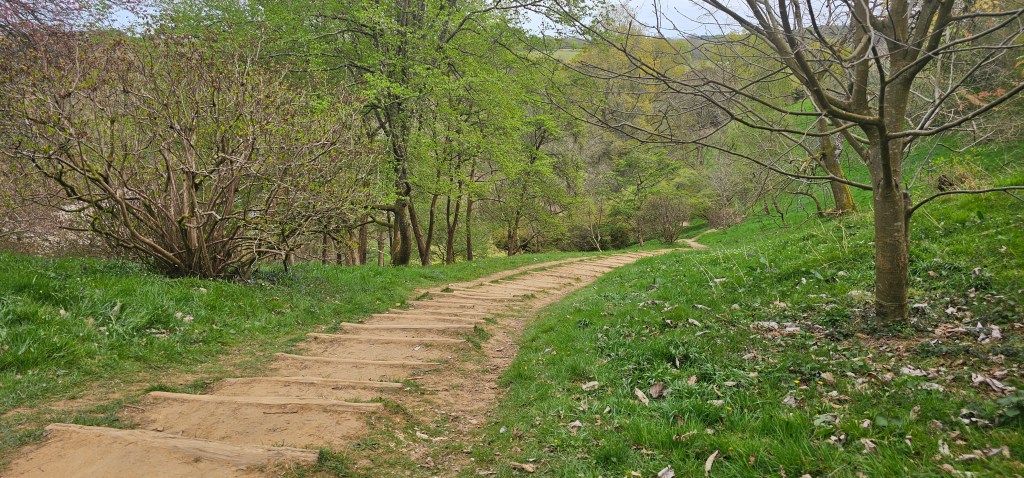
This last weekend, our family took a trip to Winkworth Arboretum in the Surrey Hills. It was one of those unexpectedly perfect days – mild, sunny, and serene. The kind of day that invites you to breathe a little deeper, slow your pace, and tune into the world around you.
At one point, lying back on the grass and looking up at the sky, I wasn’t thinking of anything in particular, I was just… there. It felt calm, quiet, peaceful. Then – just like that – I thought about the drive home. Roadworks. Diversions. Traffic. And suddenly that peaceful state evaporated. My shoulders tensed. My brain whirred. The contrast was startling. Nothing had physically changed – I was still lying there under the same blue sky – but internally, it felt like a different world.
“Now Is All That Exists”
That shift brought to mind something I’d heard Dr Bill Pettit say in a recent webinar: “Now is all that exists.”
It’s a phrase I’ve heard in many guises over the years, often dismissed as a nice idea – uplifting but not all that practical. But recently, it’s started to resonate more deeply. Especially as I explore the link between thought and experience, and how our internal dialogue shapes the world we perceive.
What was creating that sense of calm on the one hand, and the feeling of dread a moment later? As Jamie Smart puts it in Clarity, our feelings come from thought taking form in the moment — not from our circumstances. When I was absorbed in the blue sky, the birdsong, and the rustle of the leaves, I was present, and all was calm. The moment my thoughts jumped ahead to potential traffic, the frustration crept in. But it wasn’t the traffic — it hadn’t even happened yet. It was just my thinking in that moment, doing what thinking does.
We Live in the Feeling of Our Thinking
This is an easy truth to overlook, especially when life gets busy. We blame the traffic, the looming deadlines, the difficult conversation we had last week. But if we stop and look a little closer, we realise: stress isn’t coming from the outside. It’s coming from inside – from the way we’re thinking about what’s outside.
That afternoon, when I stayed rooted in the present – the sounds of the birds, the feel of the grass, the laughter of my daughters – there was nothing to fix, nothing to worry about. Just life, unfolding as it does, one breath at a time.
Focus on the Next Step, Not the Whole Hill
Later that day, I followed my youngest daughter down a steep path. As we descended, I was acutely aware of one thing: we’d have to walk back up. Given my current level of fitness (a work-in-progress, let’s say), I knew that was going to be a challenge.
But as we made our way up again, I instinctively returned to an old habit from my cycling days: keep your eyes just ahead, and focus on the next few metres. Don’t stare at the top. While the summit can feel overwhelming, the next step rarely does.
That mindset carried me through. The climb was still tough, but it was also energising. I could feel my legs working, my heart pumping, my breath quickening – but I was in it. And with each step, I felt more alive.
The Present Moment Is Where Life Happens
Whether it’s climbing a hill or facing the everyday demands of modern life, the present moment is our anchor. The past is done. The future is imagined. All we truly have is now. And yet we spend so much of our time outside of it.
There’s an old saying: “Worrying is like a rocking chair – it gives you something to do but doesn’t get you anywhere.”
That rings true. Worry might feel like preparation or control, but it’s usually just mental noise that keeps us from fully engaging with life as it is, not as we fear it might become.
Conclusion: The Gift of Being Here
That afternoon in the Surrey Hills was a quiet reminder of something powerful: life happens in moments, not plans. We don’t need to eliminate thought, or control it – but recognising when we’re getting caught in imagined futures or recycled pasts can help us gently return to the here and now.
So whether you’re lying under a wide blue sky or stuck in traffic (real or imagined), notice where your attention is. Can you come back to your breath? To the next step? To what’s directly in front of you?
Because now really is all that exists – and it might just be more peaceful than you think.
 Patrick Hickman